Set 2 – Contact sheets

For this set, I have taken a variety of photos in the weekends, in which more than 30 of them were taken at the TeamLab exhibition made by Epson at Chaoyang Joy City. The exhibition was very interesting, as it utilized various lights and shapes in the projectors to make the attraction fun and mesmerizing, which was perfect for my artist vision, Tom Reaume.

All photos contact sheet

After eliminating the duplicates and selecting the photos that were good and fit my artist vision, the photos with the yellow tag were selected:

The green photos were carefully selected to specifically represent the photos of Tom Reaume.

If you noticed, the top three photos have been continuously selected to be in the next set because they are actually the photos I want to use in my final triptych.

Red photos — these will be the photos I want in my triptych.

Set 2 – Artist Inspiration: Tom Reaume

While surfing the internet, I came across an artist and their works that significantly caught my eye, which is Tom Reaume because of his abundant use of colors and shapes. A handful of his works are black and white, but the ones with color are truly the ones that I am most interested in.

Here are some examples of his works:

Light Dance #2

An Affair of the Heart

Along the Boulevard

Nocturnal Orbits

Image X

Characteristics that Tom Reaume uses:

  • Shape
  • Color
  • Texture


798 Photos Contact Sheets

Below are all of the photos I have taken at 798:

I have tried to take photos with some special patterns and perspectives, but for most I feel like I had some trouble finding areas with significant color, as most of them were either brown or grey, which means perhaps the chosen photos in the green or red would have to be edited to fit the colorful theme of Uta Barth’s works.

All photos contact sheet


After selecting the “better” photos and eliminating the duplicates, the photos with yellow tags (tags not shown) were selected.

Yellow photos contact sheet:


From the yellow photos, I further selected the photos that fit the theme of the artist inspiration, and selected some photos that were actually “good,” but may not have fitted the artist inspiration.

Green photos contact sheet:


Because the photos that had the actually yellow color in them were really good photos in my view, I wanted to select the two on the bottom right, but I felt that the top three and the left on a row below had more potential to be in a triptage. I then selected one to two other photos that were the best.

Red photos contact sheet:

Abstraction from 798

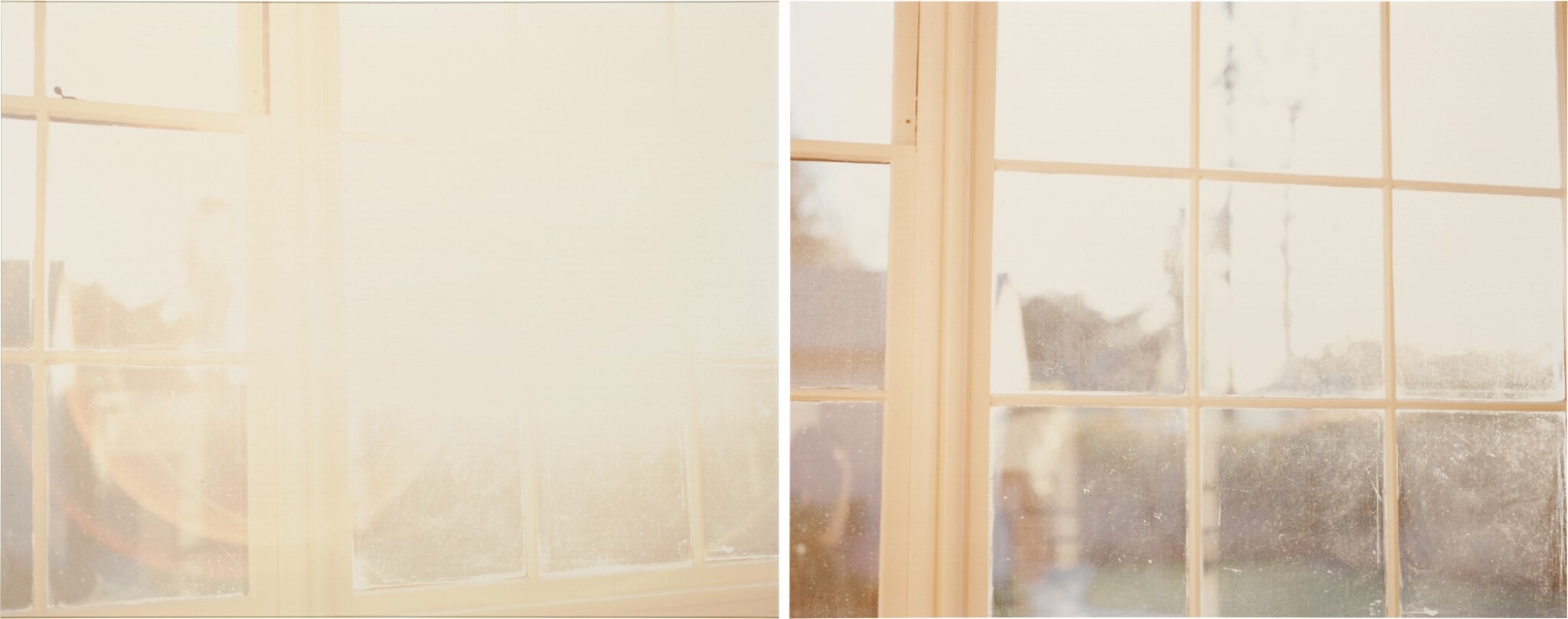
Out of the 360+ photos taken at 798, the photos in this contact sheet have been carefully selected to reflect the theme of the artist inspiration, Uta Barth. These photos have many elements that reflect the artist I was inspired by, in which the most obvious would be the sense of blurriness and the variety of colors. Many of the subjects featured in the photo were experimented on by taking a shot through colored glass or some interesting holes, creating depth in the photo while preserving the elements of the artist inspiration. The reason why I chose Uta Barth as my artist inspiration was because even though a lot of her photos are blurred, she can still let the photos “pop” and “become alive” through the use of simple colors.

Artist Vision: Uta Barth

Uta Barth is a specific artist, or contemporary photographer that inspired me because of her use of perception and colors in her photos. She is very skilled at utilizing color and focus in her photos to make them extremely mesmerizing, which immediately attracted me when I saw them.

Here are some of her works that appeal to me:

๐Ÿ‘†Field #20, 1997

no title]', Uta Barth, 1995โ€“7 | Tate

๐Ÿ‘†no title]’ , 1995-7

๐Ÿ‘†From Nowhere Near, 1999

๐Ÿ‘†Untitled #5, 2010

๐Ÿ‘†Sundial (07.9), 2007

UTA BARTH | UNTITLED 99.14 (FROM NOWHERE NEAR) | Contemporary Photographs | 2020 | Sotheby's

๐Ÿ‘†Untitled 99.14, 1999

Characteristics that Uta Barth uses:

  • Tone

In a lot of the photographs, Uta Barth utilizes tone to make the photos have a different filter or feeling.

  • Focus

Many of Uta Barth’s works are out of focus, which makes them very abstract.

  • Light


Untitled (Staircase) by Albert Renger-Patzsch


In this photo that features a staircase, Albert Renger-Patzsch might have been interested in capturing:

-The railings of the staircase

-The shape of the steps

-The shape the composition of the photo gives to the walls of the stairwell

If I were the photographer, I would name this photo Staircases, because first of all the photo is untitled so I can name it as what is in the photo and it would be different, but perhaps the name Spiral Staircases would be suitable for this photo because this indeed is a photo of the spiral staircase, but the word spiral gives the photo a sense of pattern and lines.

The use of formal elements:

  • Lines

The thin, straight lines between the railing and the ground show vertical energy and movement. The railing on top of it, is a curved line that is the main focus of the photo. It guides the viewer’s eyes in the direction of whether the staircase is going up or coming down.

  • Shapes

The triangular shapes of the steps of the staircase shown in the photo, as well as the walls shown, are all the photographer’s interactions with lines in this photo.

  • Patterns

In addition to showing vertical energy and movement, the straight lines below the railing of the staircase are a recurring flow of patterns whether in the lower half of the photo or in the top of the photo.


ELEMENTS

Formal elements are elements in photography that are used to make a photo. The elements include line, shape, pattern, texture, tone, and focus.

Lines

๐Ÿ‘† ‘New York City,’ 1974 by Harry Callahan

In photography, there are many objects that can act as lines in a photo. They can be straight, curvy, thin, or thick, and most of the time create direction and show movement and energy.


Shapes

๐Ÿ‘† ‘Paper Self,’ 2012 by Abelardo Morell

Shapes can be straight-edged or curved but depending on how the photo is taken the shapes can bring a different feeling to the photo and how the viewer sees it.


Patterns

๐Ÿ‘† Transparent City #12 by Michael Wolf

Objects, shapes, or lines can all create repetition in a photo, which produces a rhythm or pattern that appeals to the viewer. Occasionally, photos will also feature reflections or echoes in some aspects.


Texture

๐Ÿ‘† ‘Ice,’ Lofoten, Norway, 2017 by Hans Strand

In most cases, texture adds visual interest to a photo, and really brings the viewer of the photo into the environment, as if touching what was inside the photo was possible.


Tone

๐Ÿ‘† Salvage Series by Dan Ferro

Tones can range from dark to light. If a pure color was added to grey, there would be tone.


Focus

๐Ÿ‘† Motion Flower, 1967 by Ernst Haas

Focus allows objects in a photo to appear clearer or sharper, while having other things blurred. This aspect may be “played around” with by photographers to create interesting effects.

ABSTRACTION IN PHOTOGRAPHY

Pictorialism was a reinvented form of art in photography mostly active between 1885 and 1915. Pictorialists utilized a variety of darkroom techniques to allow photos to replicate stories or scenes or appear in a dream-like landscape.

๐Ÿ‘†1890 – The Onion Field, Mersea Island, Essex by George Davison

Straight photography highlights the camera’s ability to produce sharp images that are extremely detailed. The photos produced in this specific type of photography are prepared so that they do not need to be edited. The technique emphasizes the subject as viewed in the camera.

๐Ÿ‘‡1903 – ‘A Sea of Steps’ Wells Cathedral, Steps to Chapter House by Frederick Henry Evans

Straight photography was popular among photographers because it respected the medium’s own technical language for the first time in the history of photography. This type of photography was also the foundation to many other movements like documentary, street photography, and later abstract photography.

Edward Weston and Aaron Siskind were one of the first people to create photographs that transformed subjects into true-to-life objects and abstractions of shapes and patterns. The movement of straight photography allowed them to take photos that relied on the subject for visual interest, in comparison to how the surface quality was the main point of pictorialist photos.

๐Ÿ‘‡1931 – Cabbage Leaf by Edward Weston

Weston photographed arrangements of Cabbage leaves over a nine-year period from 1927 to 1936.

Cabbage Leaf - Wikipedia

The works of Andreas Gursky and Uta Barth are abstract because they were able to utilize humongous panoramic landscape and compositions to contribute to new forms of art from the 1970s to almost the 2000s.

Andreas Gursky, 99 Cent, 1999 ยท SFMOMA

๐Ÿ‘†1999 – 99 Cent by Andreas Gursky