ABSTRACTION

“Abstract photography can be defined as capturing images in which the subject isn’t the most interesting element.”

True “abstract photography” is presented to the audience by highlighting all areas of an image. The highlighting may include distorting other features of the photo. The emphasis on background and specific features other than the subject in a photo can inspire different interpretations for the audience. In this unit, I would like to inquire the preferred structure in abstract photography within an image, and finding true personal definition for abstract photography.


How does one structure an abstract photo?

How does one distinguish abstract photography from arbitrary art?

What subjects are there to look for?


My own definition of abstraction is objects/backgrounds within a photo including attention catching features highlighting else parts to catch one’s attention for one to come up with one’s own interpretation of the photograph.

Posted in Uncategorized | Leave a comment

Description

In this blog, I will be explaining my collection of photos with the theme of WRONG. This collection aims to be horrendous, breaking the rules of traditional photography, becoming a counterexample of entertaining and coherent photos. Key terms

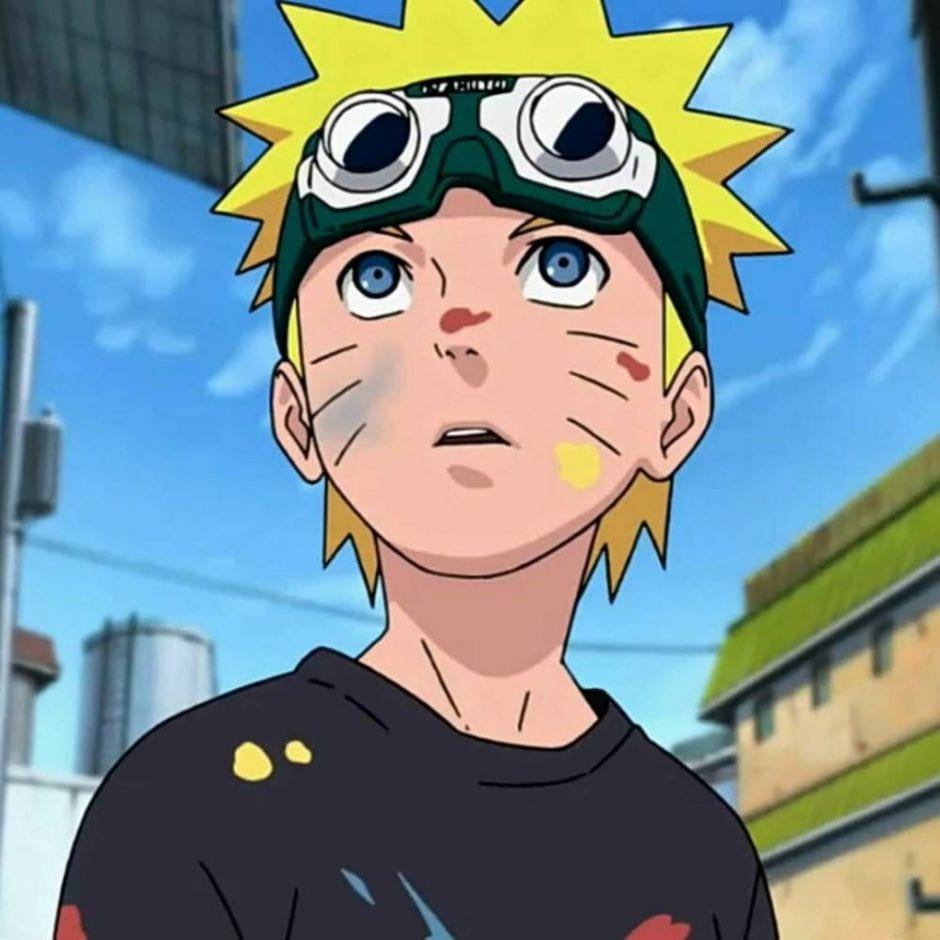
Glasses no longer clear

In this photo, to allow it to be “wrong,” I broke rules of photography to present a counterexample of a good picture. Firstly, the rule of thirds was broken. In the rule of thirds, the subject should be within the center when a screen is broken in 9 pieces. To break this, I deliberately zoomed in on one’s face to fill the screen with a section of the subject. Secondly, similar to the rule of thirds, I deliberately left out the background when breaking the rule thirds, ruining the composition. If a background could not be included, then no other colors or objects could elaborate upon a scene. In other words, I prevented composition from taking into effect, as all other elements were covered by oneself. Lastly, I intended for this photo to be out of focus, to blur the subject.

Myopic Plant

The photo is deliberately out of focus to blur the entire scene. Just like the previous photo, it also breaks the rule of thirds as the subject, the plant, is in the very left of the photo. Nonetheless, the subject is even unclear. I intended so that the photo had no subject, which ultimately suggests that this photo has no purpose whatsoever.

Blurred Man

In this photo, unlike the previous, has a concise target obeying the rule of thirds. However, the blurred focus and unanimous, barely colored background ruins the photo. The background is just like the man’s skin, destroying the background and composition, making it a vague, unclear and boring photo.

Diagnal the Hall

My intended out of focus causes viewers to be unable to appreciate the photo. Moreover, the terrible composition, such as where the photo is not even flat with random colors everywhere, making it a pointless and chaotic picture.

Wrong Focus

The biggest intended mistake in this photo is the focus. The focus is purposely on the background instead the subject, which violates normal rules of emphasizing the subject. This causes the intended subject to shift, also ruining the rule of thirds, as the subject is on the extreme right. The subject’s misplacement and ambiguity when compared to the background allows it to be part of this collection.

Can’t see

The arbitrary figure standing on the extremely left, breaking the rule of thirds, and the terrible focus is what mainly causes this photo to be wrong. The arbitrary position destroys the composition of the photo, having the subject stand awkwardly on the right.

Poler

With a similar composition and theme to “Can’t See,” the pole is sticking out of the character’s head, whom is out of focus. This deliberately ruins the composition as too little of the character is included in the law of thirds.

Sign

The ISO of the camera is abundantly high, causing a huge blur in the lighting, making the image too light to actually see the sign, which ruins the subject. Moreover, the sign is deliberately out of focus, causing a blur and incoherent scene.

Darker

A reciprocal of the sign, in which the ISO is surprisingly low, causing the character and the background to be extremely dark. Moreover, the camera is out of focus, causing the main subject to be blurry.

Darker 2

A similar photo to Darker, except the background allows the image to be worse. The pure white background shows no uniqueness and is plain and does not elaborate any colors, causing a poor composition.
Posted in Uncategorized | Leave a comment

Photography Blog Post 1

Can you take a wrong picture?

A wrong picture could be taken by messing around with focus, background, and colors. I could achieve this by allowing motion in my subject, blurring it in the final image.

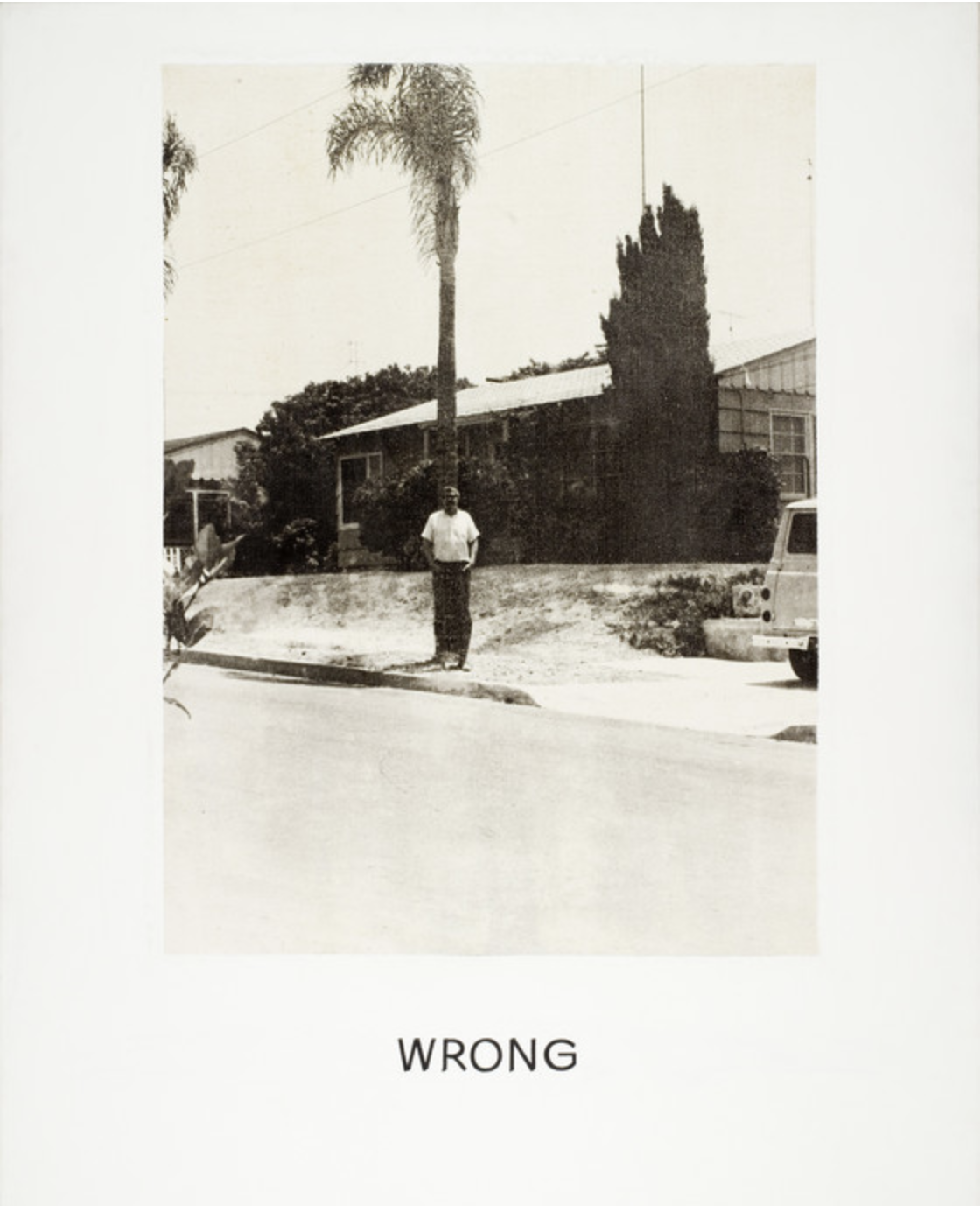
How is context important in Photography? Does the word “Wrong” make a difference? Why?

Context is important as it explains the choices the photographer is making. Without the context, an image may be confusing to most viewers. Moreover, if the author wants to deliver a message through the photo, context would be crucial to help elaborate. In the image above, the word “Wrong” provides context to the positioning of the photo, where the man is standing to cover up a tree. This helps elaborate the confusing scene in the photo, which informs us of the author’s purpose when taking the photo. Without context, the purpose of this image would be unknown and would seem confusing.

Posted in Uncategorized | Leave a comment

Independent Reading Reflection

During grade 9 this year, I have independently read 3 books (I read more, but these 3 are my favourite) so far.

To begin with, the first book I read is called “Google It,” a non-fiction biography of the founders of Google and how Google advanced into one of the world’s most used search engines and how it opened up a brand new generation. This book has very creative language, which makes it teenager-friendly. Some examples include: “Well, do you still remember way back when they were in university? Well, their project was offered to be bought by Yahoo!, but they refused to 1 million USD offer! 1 MILLION USD! A huge amount of cash at the time, and they were still university students!” I enjoyed the playful language and learned a lot of fun facts about Google and coding.

To continue, a book that I read halfway but decided to give up is called “The Abomination.” It talks about the main character, Holly Boland arriving at Italy to discover some murder cases. It is extremely confusing for me as the author switches from character to character between chapters and it is very difficult to organize what you read in consecutive order which makes me, the reader, at times very confused about what just happened. Furthermore, the theme and information I have read so far does not interest me as much, so I decided to change a book.

Finally, the book I finished recently is called “One of Us is Lying.” This book talks about the sudden death of Simon, who created a gossip app that disturbs a lot of people. 4 people are suspected of murdering him with his allergy, peanut oil, but all seems to be innocent. Throughout the story, the author changes perspective at time to time and manages to write a perfect transition between each character so that the reader goes along with the plot. At the end, readers find that there is an enormous scheme behind the whole story and a revenge is what was planned…

In conclusion, I feel the 2 books I have completed are very interesting and the last book had the most impact on me as it got me thinking and analyzing mysteries in life, perhaps because the book was too attractive and I have gotten my self sucked in. I am considering to read the sequel of “One of Us is Lying” next, as the author performs the mystery genre very well.

Posted in Books, Google, ISB | Leave a comment

Develop and Plan

The techniques I will use for this model include cutting, 3D printing (designing), using string as elastic power, etc. However, I cannot be sure that I will not change my plan and model in the future. I will learn these skills likely by trial error, and so far my use of these skills have been successful in terms of tying rope and 3d printing. My plan is on the bottom right corner of the design.

Posted in Uncategorized | Tagged , | Leave a comment

Reflect and Share

This fan functions by converting mechanical energy into kinetic energy. The mechanical energy, or to be more specific, converted from electric energy, powers the fan, causing it to spin and spin to create kinetic energy, which creates a breeze that could be very useful in the hot days of the summer.

In producing this product, we were very successful with the motors and the design of the propeller. The motors, with some assistance from friends in other groups, worked very well and the wires managed to stick to the motor without much trouble. Furthermore, the design of the on/off switches are very convenient. The button is located just 1 cm below the wood platform, and flicking is all that is needed.


Something that we could have improved on was that the motor was not in the middle of the wooden piece. Due to absences of my partner and a near complete recreation in contrast to the original plan, we had very limited time and the wood piece was found like this and therefore the fan could not be in the middle. Also, the gluing needs more time as sometimes it can be very unstable.

This product is made from materials in the design lab. However, the 3D printing involved plastic and the batteries could mean electronic waste, which is damaging to the environment.

This product is very effective in its function to the audience and could be used as a cooler during the summer or when a breeze is needed. The power should be more than enough even with only two batteries and we believe that the creation of this product is a success.

Posted in Uncategorized | Leave a comment

Create and Improve


In the process of creation, my team first decided to create a hand-powered fan. Eventually, our prototype was almost finished. We went to gather peer feedback, where they suggested a problem where it was very to spin clockwise, but as the rope ran out they had to manually adjust the rope, which took a lot of time. Therefore, we decided to use a motor to help it spin the other way. However, we eventually discovered that it was pointless to still keep the rope as we could just have it motor powered completely, so we broke it apart and made it into a motor fan instead. It worked quite well, where the power and wind was really powerful even with two batteries. Furthermore, it was very convenient as the handle made it portable and you could turn it on with a switch of a button. Before, the energy conversion was potential to kinetic as people had to turn the fan. After, the energy conversion is mechanical to kinetic, as it is no longer powered by human strength, and instead by motor.

Posted in Science | Tagged | Leave a comment

Define and Inquire: Engineering Project

I am currently thinking on doing a hand powered fan. This can be very useful to audiences from 5-20 years old. This can be a hand-powered cooler when the climate is very hot during the summer, and also functions as a toy. My audience is 5-20 as children below 5 usually have safety hazards using this, while those above 20 may not find interest or need in the fan. This idea has very specific function and it has a very clear target audience, while clearly showing how energy transfers in this toy. However, the rope in the fan can be very difficult to tie up and its appearance needs to be fixed.

This car could also be another toy that I could make. This targets audiences 5-10, where children in this age is still interested in toys and not yet enter the stage of adolescence. This toy resembles a race car. To function, one must pull it back and release it for it to run. This shows very direct transfer of energy. However, it is very difficult to make and has to be very precise and is easy to break.

Posted in ISB, Science, Uncategorized | Tagged , , | Leave a comment

Gynophobia Design

In this model, I attempted to create the effect of a person feeling intimidated and someone with no confidence when facing women. The women in this scenario, are representing confused and perhaps even upset emotions towards the weird reaction of the man. (I tried my best to) The man is surrounded by black and terrible emotion, while the women are surrounded by “regular” white. The inspiration taken from this was the enclosed space of someone feeling scared or uncertain. When applied in the design, it clearly expresses the negative emotion from the man. Furthermore, the man shows frightened reactions in the direction of the women. Usually, gynophobia suggests avoidance and usually occurs in more severe conditions when there are groups of women. Therefore, I added 3 figures in the design. Finally, the color contrast of black and white suggests the emotion. White represents the bright or “normal” emotions, while black suggests negative and unconfident emotion.


I wanted my model to portray the clear emotion of anxiety. This is expressed with the different emoticons on each side of the black area of the box. Gynophobia is usually caused by trauma in one’s life. These emoticons could represent some of the trauma that the person possibly has experience, to further express the reason of gynophobia in this person’s context. Furthermore, the characters’ colors are different. (Brown and red) Red represents a clear stereotypical feminine color, (no personal bias is contained) to better explain the concept of gynophobia. Or perhaps red could also be interpreted as an intimidating color, which is an effect on the man. The man is brown, representing the diminishing insides of him. It also works better with black when the man is hiding the right bottom corner. Finally, the distance between the two types of people also adds to the emotions of the man, where distance is the ideal solution when gynophobia symptoms occur.


Posted in Drama, Stagecraft, Theatre | Tagged , , , , | Leave a comment

Gynophobia

Posted in Stagecraft, Theatre | Tagged , | Leave a comment