jack

"I have no special talent. I am only passionately curious" - Albert Einstein

Category: Street Photography

Contact Sheets

Contact sheet:

Yellow selection:

For the Yellow selection I simply filtered the photos by quality, regardless of whether this fit my vision. These are those that appear to stand out as only well-captured, not bad.”

Green Selection:

The photographic images should emit a sense of stagnation, where nature and everyday life blend effortlessly together. It is about finding beauty in the simplicity of the moment, for example, a duck gliding across the water without a struggle, which is effortless yet with purpose. Whether it be the rippling of the water around the duck or the reflection of the light on its surface, these images capture delicate interplays between movement and stillness, tradition and change. Inthese choices, I try to convey an interaction with nature at a deeper level-with those tranquil, hushed moments of life in its simplestdimensions.

Red selection:

Image 1: Man Sitting on Stairs, Watching Phone

This photo is a silent, solitary moment with urban hurry. A man sits crookedly on a flight of stairs, absorbed in his phone while a shadow stretches across the ground, enhancing the feeling of isolation amidstthe hustle and bustle of street life. A scene so telling of tradition meeting modernity-a theme very pertinent to my vision for the project. The stairway itself seems to represent the very traditional, agedarchitecture, contrasting with this modern activity that he is engaging in with his phone. It symbolizes the interplay of past and present within the Hutongs.

Indeed, the fishing is shown here in terms of my photographic techniques: I waited when the shadow would fall correctly for the man,align with the stairs to create an evocative contrast of light and dark, and this gets the viewer’s attention to the stillness of the individual against the active urban environment. The background focus isunsubtle and quite significant here. Aged stairs and architecture formthe background in which the focal point develops: the man and,importantly, his shadow. The interaction between this figure and his environment gives way to a broad theme of personal space versus overwhelming presence of the city.

Last but not least, the following picture illustrates working the scene: I framed the shot to let the shadow become the protagonist, telling its story. There, the man is a modern figure who interacts with thishistorical space, similar to the continuity of time within the Hutongs.

Image 2: Crowded Street with People Walking

This photo captures the high-energy pulse of life in the Hutong: a crowded street, with people passing by each other, their bodies blurred by motion. The image evokes movement and change, but within that chaos, theres a stillness. It speaks to the ongoing process of adaptation in a space that‘s old and new. The jostling crowd could be takenmetaphorically to represent the pressures of modernitypeople makingtheir way through lives as the infrastructure around them decays slowly. This photo fits well with the vision of capturing “layers of time” in the Hutongs, where every pedestrians rushed step and his or her story get lost in the sea of faces rushing through time.

Here, the fishing technique is applied in waiting for the exact moment when a large group of people converges. The photo was taken at a time when the movement of the people created this almost symbiotic flowthat highlighted the temporality of individual lives in a place of constant change. Now, here, the focus is on background: the people in the foreground move, while the background, with the architectural elements of the Hutong streets, suggests a contrast between slow-moving enduring physical space and rapid human activity. Working the scene involved placing myself in the right position to allow both moving pedestrians and still architecture to coexist, illustrating the tension between people and place. The sense of a layered environment—human figures woven with their surroundings—visually communicates the coexistence of past and present in the Hutong life.


These two pictures represent my vision for Hutong Life: Layers of Time and Space through the display of everyday life‘s fluidity within a historical setting. Each image balances moments of stillness and movement, traditional and modern elements, highlighting how each individual moment fits into the greater picture of a neighborhood in flux. Utilizing the techniques of fishing, focusing on the background, and working the scene, I expose these layers to invite the viewer to reflect upon the stories lying within the urban environment.
Mind-Map-StreetPhotography

https://padlet.com/jackzhou/mindmap-3op2ipw06deqslz2

Inspired Photographer

My Artist: Fan Ho

Fan Ho: Style Analysis

Fan Ho’s work is often defined by its striking use of light and shadow, and his mastery in capturing the interplay between these elements is one of the most evocative aspects of his photography. Much like other street photographers of his era, Ho had an exceptional ability to use shadows not just as a background or filler but as a central visual and emotional tool. It was his masterly handling of light that was at work, especially in the dynamic cityscapes of the 1950s and 1960s in Hong Kong, which could elevate him into atmospheric, almost film-like compositions from the most unassuming of street scenes.

What sets Fan Ho apart is using shadows to invoke mood, narrative, and mystery. Very often, he resorted to sharp contrasts with dark shadows appearing to engulf or frame his subjects, hence giving drama to the scenes. His shadows often stretch across the frame and are almost another character in the composition, adding depth and complexity to what could be a simple street photograph. His silhouetted images, created either by heavy backlighting or by placing the subject in relation to the light source, give his images a sense of intrigue, even timelessness.

Photo Critique: “Approaching Shadow” (1950s-1960s)

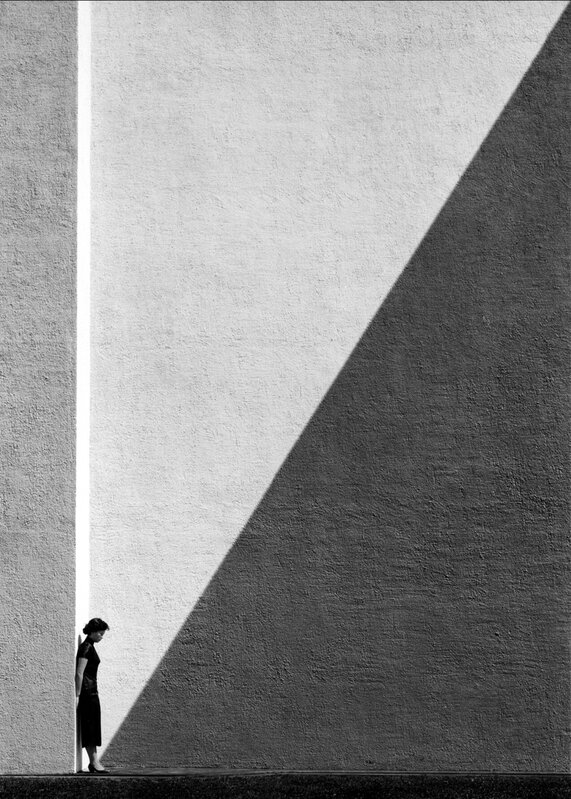
Fan Ho | 'Approaching Shadow', Hong Kong (1954) | Artsy

In one of the classic photographs titled Approaching Shadow by Fan Ho, there is a lone figure moving down the street-thin, narrow-down the middle, bathed in strong light from a nearby window. The subject’s shadowy figure is dramatically stretched down the cobblestone ground. A background of shadows fills the frame with intricate, angular patterns that evoke tension and movement within it. But while still, the shadows would have seemed to ‘advance’ upon the subject, and an element of emotional suspense is created-as if the street itself had come alive, pulling the figure deeper into the scene.

The light and dark are sharply in contrast to each other, having impressive and powerful strength in this photo, while a figure in the foreground gets wrapped by the playing shadow. Ho uses the encroaching shadow to insinuate themes of alienation, the passing of time, and even change, perhaps, while the figure navigates through an environment that is both inviting and forbidding. Subtle yet palpable, this captures the sense of movement-the light and shadow in a dance, it would appear, with the subject sandwiched between them.

Connection with the Hutong Project:

Approaching Shadow by Fan Ho can be considered the ultimate reference for capturing Hutongs’ essence in Beijing, as through this photograph, one sees how shadows can create both a visual and emotional narrative within a street scene. The narrow alleys in Hutongs-much like the streets of Hong Kong during the time of Fan Ho-offer the ultimate playground to experiment with light and shadow. High walls and seldom any direct sunlight create alleys of deep contrasts of light through the gaps or windows and stretched shadows across the scene.

In the Hutongs, the shadows become major components of telling the story I want to tell. Like Ho, I will speak to the way in which shadows carve the character of the space: imposing building shadows, gentle clothesline drying, or lengthening human shades shifting through the roadways. Light and dark can create an atmosphere of mystery, intimacy, or even nostalgia so important to the way I want to capture the essence of Hutong. Mostly, I am interested in the use of Ho where there is a lot of shading to add complexity and drama. I would like to see if the shadows could reach out for the subjects of my photos and actively engage in the composition themselves. Much as with Fan Ho’s work, where at times the shadows seem to swallow up or pursue his subjects, I will be shooting to make images where the shadows appear to interact with the people of the Hutong-either a shadow reaching toward a person sitting in front of a doorway or the long evening shadows that creep along the cobblestone streets. These moments will add the sense of timelessness; the physicality of the street gets to meet the human experience.

That is where the work of Fan Ho comes in. It is really amazing to see how he depicts a quiet, atmospheric quality in a place and still subtly infuses it with narrative. Using the relation between light and shadow will expose the unseen drama and beauty of these historic alleys; it will be both about architecture and about the lives of people inhabiting them.

6 techniques I chose

1. Focus on the background

2.The fishing technique

3.Get really close

4.Composition Rules – Subject In the Middle

5.Visual elements: pattern

6. Dont just take one photo

Statement of Intent

Statement of Intent:

The title of this project is:
“Hutong Life: Layers of Time and Space”

The concept/story I want to tell with my photographs is:
This project is about the dynamic, ever-changing Hutong in Beijing. I will try to capture everything through street photography: the high energy, the details of what happens, and the tenderness of every single moment that occurs down these tiny alleys. The Hutongs are also a statement-a combination of old and new, with traditional courtyards residing next to new buildings and street vendors competing for space against passing bicycles and pedestrians. I would like to tell, with my images, a story of coexistence between past and present: history floods into everyday life. How do people get through in shaping their environment in the process of change?.

I want my audience to feel:
I want my audience to feel a sense of connection to the rhythm of life in the Hutongs: to feel that they themselves have stepped into these spaces, feeling the textures, the sounds, the movements of the street. This should elicit feelings of nostalgia, curiosity, and wonder, capturing the quiet beauty of everyday life in a place which is rapidly disappearing. I want them to appreciate the resilience of people inhabiting these spaces, and also the layering of history and culture visible in textures and patterns of buildings, the flow of traffic, and moments of personal interaction.

I will get inspiration and develop my ideas by looking for photographs that:

I will get inspiration and develop my ideas by looking for photographs that play with depth and contrast between foreground and background, where the subject interacts with their environment in a visually significant way. I will be inspired by street photography that focuses on the unnoticed details—the patterns in the street, the textures of old buildings, and the fleeting moments of interaction between people. I will also look at images that use the fishing technique to create a sense of tension and anticipation, where there is a moment waiting to unfold. Additionally, I will study works that explore the power of proximity—getting close to the subject to create intimacy, capturing not just the face but the raw, emotional connection between people and their surroundings.

I’ll also draw inspiration from photographs that utilize strong composition rules, especially when placing the subject in the middle, where it creates a sense of harmony or balance in chaotic environments. Lastly, I’ll examine work that uses visual patterns—whether in architecture, textiles, or human behavior—to tie together seemingly disparate elements into a cohesive visual narrative.

Mood Board

General Concept: “The Everyday Pulse of Hutong Life”

The general concept I want to focus on is:
“The Everyday Pulse of Hutong Life”

What will be captured here is an idea of daily rituals, interactions, and information in details that define life in the historic Hutong neighborhoods of Beijing. This is where fragile balancing of tradition and modernity comes into view, bringing forth all those little moments usually overlooked, yet showing what these communities are actually like. Emphasize the intimate and lived-in quality of Hutong life and day-to-day people, places, and patterns that constitute the rhythm of the alleyways-be it an elderly man sitting at a noodle cart, children playing in a courtyard, or crumbling texture of the old bricks that have seen generations come and go. It is through these images that I want to capture the architecture and culture but also the heartbeat of a community which would be deeply tied with its past and its future.

What is street photography?

Street photography is a form of photography catching candid,unrehearsed life in public locations. It often focuses on people, their interactions, dynamics, and those raw, unposed moments that exist inday-to-day existence. Street photography generally shows spontaneity:the interaction of individuals in and with their surroundings; normally, such pictures have an air of immediacy and authenticity.

Although the genre doesnt really follow some set rules, it can be said that street photographers generally tend to evoke emotions, tell stories, or comment on society with their photographs. It can be highly dramatic in its composition, yet often very subdued and quiet;nevertheless, it‘s usually based on observing life as it would naturally build up in public areas: streets, parks, markets, or transit systems.

© 2025 jack

Theme by Anders NorenUp ↑

Skip to toolbar