jack

"I have no special talent. I am only passionately curious" - Albert Einstein

Page 3 of 4

Formal Elements of Photography

Photography is an enormous world and there are some principles and elements that can help you to make better images. These are the fundamental components of photography. They are the hand of a photographer, who shape his message or emotion and story through a lens. We will also be unpacking the interpretation of formal elements in photography and moving through each six discussed to date including line, shape, pattern texture tone focus.

What are Formal Elements in Photography?

In photography, formal elements are the basic visual properties of composition and impact in an image. This has to do with more than just the content of images, it is also a matter of how and where photographers use light, color, space as element which often carry ambiguous or symbolic meaning that narrative genres. These are the elements with which photographers can take their work to another level in terms of emotional and visual interest as well.

The Six Formal Elements of Photography:

  1. Line: L

    Example: An excellent example of the use of line in photography is Ansel Adam’s monolith, the face of half dome. The vertical lines of mountain and the diagonal line of the shadow imbue the picture with dramatic sense of grandeur.

    Monolith, the Face of Half Dome - Wikipedia

  2. Shape: Shapes are the two-dimensional forms that define the boundaries of objects within an image. They can be geometric (such as circles, squares, and triangles) or organic (such as the shape of a leaf or a flower). Shapes can be used to create emphasis, contrast, or repetition within an image.

    Example: The iconic image “The Great Wave off Kanagawa” by Katsushika Hokusai is a masterful example of the use of shape in photography (or, in this case, traditional Japanese woodblock printing). The enormous wave, with its undulating curves and swirling shapes, dominates the composition and creates a sense of awe and power.

    The Great Wave off Kanagawa - Wikipedia

  3. Pattern:  Patterns are repetitive elements that create a sense of rhythm and order in an image. They can be natural (such as stripes on zebras) or artificial (such as tiles on roofs). Patterns can be used to add interest, texture, or depth to images.

    Example:

    Vivian Maier Street Photographer - FOTO8

  4. Texture: Texture refers to the visual and tactile quality of an object’s surface. In photography, texture can be conveyed through lighting, shadows, and the use of depth of field. It can add dimension and realism to an image, making it feel more tactile and alive.

    Example:

    Edward Weston. Pepper No. 30. 1930 | MoMA

  5. Tone: Tone refers to the lightness or darkness of an image, as well as the overall mood or atmosphere it conveys. It can be manipulated through exposure, contrast, and the use of filters. Tone can be used to create a sense of warmth, coolness, happiness, or sadness.

    Example: A powerful example of tone in photography is Dorothea Lange’s “Migrant Mother.” The image features a destitute woman and her children, with their faces etched in exhaustion and despair. The low-key lighting and muted tones create a sense of hopelessness and desperation that is deeply affecting.
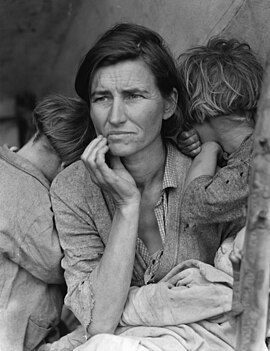
    Migrant Mother - Wikipedia

  6. Focus: Focus refers to the clarity or sharpness of an image. It determines which elements within the frame are in sharp focus and which are blurred. Focus can be used to draw attention to a particular subject or element, or to create a sense of depth and dimension.

    Example: One of the most famous focus example in photography  is Henri Cartier-Bresson’s “Behind the Gare Saint-Lazare.” This picture portrays a moment of spontaneous humor and solidarity between two men on the street. The shallow depth of field and clear focus on the subjects’ faces gives the impression of closeness and immediacy that is fascinating.

    Henri Cartier-Bresson's Behind The Gare Saint-Lazare - For Sale on Artsy

Can an Image Show Just One Element at a Time?

While the image can highlight a single formal element, it is more likely that the images will contain several elements to a different degree. The secret is to utilize these ingredients in a way that is balanced and coherent so that they can be combined to form a solid and powerful composition. Nevertheless, the fact is undeniable that there are many images that promote one aspect only, such as Edward Weston’s “Pepper No. 30” which has the texture emphasizing, and Henri Cartier-Bresson’s “Behind the Gare Saint-Lazare” which has the precise focus. In the end, the decision of which elements to stress the most is up to the photographer and it will be influenced by the subject, the required mood and atmosphere, and the composition of the image as a whole.


Citations:

Wikipedia contributors. “File:Tsunami by Hokusai 19th Century.Jpg.” Wikipedia, The Free Encyclopedia, https://en.wikipedia.org/w/index.php?title=File:Tsunami_by_hokusai_19th_century.jpg&oldid=1098889935.

Wikimedia.org, https://upload.wikimedia.org/wikipedia/commons/thumb/5/5e/Ansel-adams-monolith-the-face-of-half-dome.jpg/1200px-Ansel-adams-monolith-the-face-of-half-dome.jpg. Accessed 4 Sept. 2024.

Gstatic.com, https://encrypted-tbn0.gstatic.com/images?q=tbn:ANd9GcQSqWuJp8EdKHtlBSXVOzMpD_qSZCMUfBd-rA&s. Accessed 5 Sept. 2024.

Moma.org, https://www.moma.org/d/assets/W1siZiIsIjIwMTgvMTAvMzEvNmg3YWJ4em5meV85MDgyOC5qcGciXSxbInAiLCJjb252ZXJ0IiwiLXF1YWxpdHkgOTAgLXJlc2l6ZSAyMDAweDIwMDBcdTAwM2UiXV0/90828.jpg?sha=2a0d3ee54b3baff2. Accessed 5 Sept. 2024.

Gstatic.com, https://encrypted-tbn0.gstatic.com/images?q=tbn:ANd9GcTvHmZwu6hxyrnMtWLH6iX7aJHeEzoQPMh0Pw&s. Accessed 8 Sept. 2024.

Cloudfront.net, https://d7hftxdivxxvm.cloudfront.net/?height=500&quality=80&resize_to=fill&src=https%3A%2F%2Fd32dm0rphc51dk.cloudfront.net%2FiVcoT84MN8NYSC60807FQQ%2Fnormalized.jpg&width=670. Accessed 8 Sept. 2024.

Definition of Abstract Photography

Abstract photography is a genre of photography that pays greater attention to visual elements, shape, color, texture, and pattern rather than recognizable themes. It stresses the creation of images, which can evoke emotion or provoke thought through composition and form without portraying text or recognizable scenes. While underlining those abstract qualities, this type urges the viewer to perceive and interpret the photos more intuitively and personally, without dwelling on the conventional themes but finding the very quintessence and beauty of the visual elements as such.

Starting Point

“Abstract photography can be defined as capturing images in which the subject isn’t the most interesting element. Albert Renger-Patzsch and Aaron Siskind photographed the ordinary to reveal their beauty. Uta Barth reversed the typical use of the camera, shooting out of focus and Andreas Gursky photographs the repetition of elements. During this unit, you will investigate appropriate examples of abstract photography and respond in your own way.”

Abstract photography shifts attention from the subject to its expression. It does not depict the displayed content, but highlights visual elements such as color, shape, and texture. To illustrate this point, Renger Patzsch and Siskind use their ordinary object images to create captivating images, including the aesthetics of the given object. Uta Barth’s defocus lens prioritizes form and color over specific details, while Andreas Gursky’s repetition highlights patterns and proportions. This unit will study these abstract properties and inspire us to take photos in a new and unique way.


Citation:

A. Develop Ideas through Investigation | International School of Beijing. (n.d.). https://dx.isb.cn/dash/#/classroom/648607/sections/lesson/344121/page/3441

Context in Photography

Photos and Contact Sheet

Journal

Dear Commander Molly


My name is Tony and I m a factory worker, things are changing in our country recently, and I don’t know what to do with it. There were rumors of rebellion and tensions were running high. Last week, I attended a town hall where the Boston Tea Party was discussed. Some expressed outrage, others saw it as a necessary act of rebellion against the British autocracy. I don’t know what to think, but I know what to do. Months passed, and news of the uprising spread like wildfire. I have heard rumors of the battles of Lexington and Concord and of brave men standing up against the British army. I know I want to be a part of it.

During the Boston Tea Party, I was torn between my allegiance to Great Britain and my growing need for independence.Although the government was trying to get rid of something different. colonists dressed up as Native Americans and threw crates of tea belonging to the East India Company into the Boston Harbor as a protest against the unfair taxes imposed by the British government. As a factory worker, I’m likely impacted by the unfair taxes and regulations imposed by the British government.


The battle of Lexington concord was a bad dream, I’m sick during the last night before the battle, but my commander forced me to join the battle, every second on the battlefield was terrified, the dead body was everywhere, I felt so lucky that I’m not hurt during the battle, or maybe I can’t see my children anymore. Thanks to God.

The turning point came when I heard about the Battle of Bunker Hill. It was a bloody and brutal battle, but it showed the colonists could stand up to the British. That’s when I knew I couldn’t stay out of it anymore.The colonial managed to hold their own against the British for most of the battle. The battle wasterrifying, I’m really scared about how will it impact me, however, I’m very lucky, the battle does not really impact me, but my children, my six-year-old daughter got shot during the battle, but it’s lucky that she’s still alive. Thank God.

The revolution really impacts me, my family and all the people, I know that this letter doesn’t really matter for you, I’m just telling you what is happening during the revolution, I wish that things can changed, I wished that you could read this latter carefully, and do your choice wisely.

Your true believer,

Tony


Attention Economy

What is attention economy? Attention economy is basically something that can pull you out of your studying task such as video games, social media notification and other stuff, this is a big problem for all the people, it can easily effect our grade, efficiency and any other stuff you can think of.

How can students try to avoid Attention economy? The best way to avoid attention economy is to manage their time the right way. Students can manage their time better by creating a schedule. Students should create a schedule that outlines their daily tasks, including study time, outdoor activities, and free time. They can also try to avoid distractions, they should try their best to minimize distraction such as video games, social media. They should also manage their rest time well, they need to take breaks every 45 minutes or an hour to make sure they are more productive and more focused. They should also set their achievable goals, and try to reach that goal by their best, this can let students to be more active.

Attention economy can easily distract people, to fix the problem, we need to make sure to manage our time productive,  we need to have a strong self-control, this is a huge challenge for all people.


The 57 Bus

The book 57 bus is about two teenagers Richard and Sasha, they live in the same city, Every day they go to the same bus, they are different person and lived in different world, Sasha is in a private school and Richard is in a public school,  however, a single reckless changed their life,  Richard burned Sasha on the bus when Sasha is in sleep, all of it is because Sasha is a wearing a skirt.

The main claim is that we need to accept all kinds of gender and sexuality.

In the book Richard is homophobic, he hates gay people, so that’s why he hates Sasha, he thought Sasha is not straight.

The book talks about justice and injustice, the conflict caused by sexuality and gender.  The evidence can be found in the book, interview 1-3, Richard said that he is homophobic, he don’t like gay people, he burned Sasha because of hate feeling.


Are you a Humanist? Rank your self!

began to clap

So the main conflict for the Fan Club is that laura is trying to get a good relationship with her classmate, but her classmate still bully her , and she have no idea about how to fix this problem, and at last she choose to join the club, so there is a problem, she didn’t like the club but why she still joined the club? Is it how she was trying to get a good relationship with them? Is this even a good plan?  And is this even possible in real life? I don’ t know how this plan work.


« Older posts Newer posts »

© 2026 jack

Theme by Anders NorenUp ↑

Skip to toolbar