Category Archives: Abstract Photogaphy

Blog Post 11: Photo Sets 2

Photographer: Bob Doran


5 Characteristics of Bob Doran’s photography:

  1. Doran utilizes movement and the afterimage of light.
  2. He either uses an abundance of vibrant colors in his works or very dull colors/black and white.
  3. Many of his works contain an abundance of lines and guiding lines, usually from the afterimage of movement.
  4. For most of his works, the setting is unclear. Looks like studio photography.
  5. His use of colors conveys strong emotions. For example in his three vibrant light movement images, two of them have a black background and the other has the background also lit up. The lit-up image conveys significantly more positive emotions. Doran uses colors to convey emotions well.

I feel like these two images match my vision especially well:

I chose this image because the light in this image is rapid and intertwined. Similar to how data is transferred through the internet and into our phones. It gives off a fleeting and futuristic feeling, which is what I would like to achieve in my images.

The connotation of light is also very suitable for my vision. First, screens use light to convey information. Also, light is often associated with fast speed. Light years and light speed are all units associated with speed. I want to emphasize how time seems to be accelerating and the attention span of people decreasing due to short-form content and the internet.

I found the shapes of the light very surprising in this photograph. I tried many times to try to create something similar but my camera movement is just not fast enough to achieve the effect in this photo. Doran manages to capture the shape and movement of the light very clearly.

Vibrant colors are the most important element in this image. Here is the image in black and white:

Without the colors, the mood of this photo completely changes. While previously it gave off a fleeting and futuristic feeling, the removal of the vibrant colors makes this image feel more grim. This suggests that color is a crucial element in this photograph and has control over the overall mood of this photograph.

This image is abstract because of the intertwining strings of light, the blurred foreground, and the unclear setting.

The intertwining strings of light create organic shapes that don’t really resemble a clear subject. The blurred foreground and gradient background create ambiguity about the setting of this image. The ambiguity, lack of context, and organic shapes together create a vibrant piece of abstract photography.

I really like Bob Doran’s use of colors in his works.

In this image, I especially like Doran’s choice to sprinkle in some cool-colored lights to go along with the overall warm-colored atmosphere. These colors add depth to the image as they are very distinguishable from most of the warm lights, and they make the colors in this image even more vibrant and varied.

These blue lights here and there remind me of the little light spots of different colors that you see when looking at something under bright sunlight. I might not be able to use these light spots in my own photography because I plan on taking my photos in the evenings when there is no sun. However, I will try to adapt the style of using varied colors in my works.

I also chose this image for analysis because I think it makes the analysis more thorough to analyze pictures that look very different from the same photographer, and the color scheme here is very different from the previous image.

I find this photograph surprising because the mood of this photo varies drastically from the others Doran has taken. The rapid movement, dark background, the fleeting, repeating lines all combine to create an intense bleak, hurried, and melancholy mood. This reminds me of the lifestyle of workers in big cities in the 1950s I’ve read in a book. Everyone rushes to their next destination in a monotone concrete jungle.

This lifestyle is really similar to what many people live now, but instead of rushing physically within the cities, they traverse the vibrant and mesmerizing internet. Repeatedly swiping to the next piece of captivating content.

These two photos inspire two different takes on my vision. One could be displaying the vibrant and rapid side of social media, only hinting at the fast-paced lifestyles many indulge in, so the audience could make a judgment themselves. Another could allude to the black-and-white image. Displaying the monotone and repetitive lifestyles brought by short-form content on the internet. Which portrays social-media-orientated entertainment as more negative.

Green Selection

I chose to first focus on the vibrant lights in the evenings outdoors. I used intentional camera movement to create different shapes with the lights. I did not choose which approach (vibrant or monotone) I wanted to go for when taking these photos. I wanted to test which approach would work best with my images.

Yellow Selection

It was a tough choice choosing three photos from these 9. I really like the last two photos of a wave and a building. They have a similar color scheme and give off a strong futuristic, rapid, and grim mood, I feel like they would work very well in black and white. Alluding to the black-and-white works of Bob Doran. But I am missing a third image and there is a strong competitor. The first column of this selection I also like very much. They are, in comparison to the alternatives, much more vibrant and neon.

Chosen Photos

I ultimately chose to combine the two approaches a little. I thought the vibrant column of photos were not interconnected enough. So I chose the last two photos and edited another photo to fit their color scheme. The colors are monotone and pretty dull, but I did not make them black and white. I feel like light blue gives these images a futuristic feeling, while the monotone color scheme makes the mood grim and melancholy. I feel like the combination was overall successful because this color scheme combined the most important aspects of the vibrant and monotone approaches: The futuristic feeling and the grim, repetitive feeling.

1.84 Pbit/s

(Bug: I cannot insert the photos individually in the right orientation 🙁 sorry for the bad resolution)

These photos are arranged in the order of increasing movement speed. In the first image, the camera is only slightly moving, creating a little bit of afterimage but the building is still clear. In the second image, the ICM intensifies and the colors within the building seep out (the bottom of the image), creating an almost painting-like feeling. In the third image, no subject is visible. The movement has intensified to the point where there are only fleeting, gradient lines of color left. I also flipped the last photo so the lines guide the viewer’s attention from left to right.

I wanted to create a sense of progression and interconnectedness in the placement of these photos. For instance, the first image is of a dark building, so I intentionally adjusted the color of the second image to make it feel almost like the same building. The connection between the second and last image is mostly of the color. Both include shades of white, pale blue, and black.

The most prominent aspects of these images are the use of color and light. The similar pale-blue color scheme unifies these images into a set, and the black surrounding the light sources in these images direct the audience’s attention to the focus point: light. Light in this photo set appears in three different positions. In the first image, the light is positioned at the top right corner of the image. In the second image, light is positioned in the center, and in the last image, light is positioned at the bottom left corner. The descending position of light is a subtle guide that leads the audience’s attention from top to bottom progressively. Connecting the images.

These photos represent my vision by progressively becoming faster and faster, symbolizing how “days feel shorter and shorter” as stated in the vision. The last image is also literally a blur, which alludes to “[days] almost become a blur” in the vision.

To continue the sense of connectedness in these photos, I altered the color scheme of the second photo, here is the original:

The editing process:

I had a very hard time deciding whether to use the original color or make it more monotone to fit the set better. The original color included a hint of pink at the right side of the image, which alludes to the image I analyzed of Bob Doran. I really like the effect but the original color disrupts the mood of the other two images so I decided to adjust the color of this photo.

The message of this photo set is actually pretty subtle. As there are no universal symbols of the internet or technology present in these photos. This is because I want to continue the ambiguous theme that was present in my previous photo set, inspired by Uta Barth. Especially with the topic of social media and technological advancements. There is so much to argue for and against these broad topics. So much so that I feel like if I drive the audience to feel a certain way in these photographs, they may be repelled by my view and choose to think another way. Moreover, I cannot guarantee that my vision or personal beliefs are objectively correct. So I chose to leave room for varied interpretations of this triptych. The only clue I left the audience about my intended message is the name of the photo set: 1.84 pbit/s, the fastest speed of information transfer currently.

After creating this photo set, I found another valid interpretation of the photo set. This photo set could also be showing the effects of rising sea levels and global warming. The third image looks very like waves in the ocean, and the first two images are photos of buildings where humans live. So another possible interpretation of this photo set (ignoring the title) would be that it shows how rising sea levels will eventually drown our civilization in waves.

I feel that there is much to improve in terms of my understanding and use of color. I set a goal to adapt to Bob Doran’s skilled use of colors, but I just could not get the second image’s coloring perfectly right:

I tested extensively with the tone and values of the blue color, even resorting to changing the center image as a whole.

But in the end, I chose a satisfactory variation of the blue color and settled with it. I could definitely improve the coloring of the second image to make it suit the other two images better.

(These ones have better resolution but the orientation is wrong)


Blog Post 10: Vision 2

Working Title: 1.84 Pbits/s

The message of my triptych will be to recognize the fast-paced era of information and technology we live in. I want the audience to reflect on how the rapid exchange of data on the internet has changed our lifestyles. This vision was largely inspired by a conversation between me and my mother. She told me that days feel shorter and shorter and almost become a blur because of the abundance of short-form content on the internet.  For inspiration, I will look at photos that include movement and light, similar to how screens function.

The working title of this vision is the highest speed at which data could be transferred using a single light source. At a rate of 1.84 petabits per second. Emphasizing the rapid speed of which information could be transferred in the present society. It is not necessary to understand the title but for people that have prior knowledge, this title would further enhance the message of my triptych.

I plan on delivering my vision through:

  1. Intentional Camera Movement
  2. Taking pictures of light in moving vehicles
  3. Studio photography of different light sources and colors


Blog Post 9: Photo Sets 1

5 Characteristics of Uta Barth’s photography:

  1. Light is frequently used to create different moods.
  2. Photos are not very rigid, most contain soft lines and shapes.
  3. Many of the photos have some form of blurring.
  4. The color scheme is not very varied in each photo, usually, the same colors in different tones are used.
  5. Many of her works are displayed in triptychs or diptychs of the same scene in different lighting or perspectives.

Describe the work of the artist referencing these characteristics (you can add more if you wish)

I have chosen Uta Barth as the photographer for my analysis because I personally really enjoy her style of photography, and I found a specific photograph from her works that really suits my vision:

I chose this image particularly because of the second image in this diptych, where a ginkgo tree is shown wrapped around a pole.

The growth of this ginkgo tree is really surprising and unusual in this photograph because it seems like the ginkgo tree has grown almost around this pole. Which is not natural ginkgo tree growth.

The color in this image is the most important formal element because the contrast in the grey-scaled sky and pole to the vibrant ginkgo leaves is the focus of this image. The strong contrast also piques the audience’s interest and urges them to inspect the photograph further, leading to their discovery of the unusual growth of this ginkgo tree. Overall, this photo is more exciting and visually appealing.

Uta Barth’s works are abstract, mainly through light and blurred effects. She also often creates different shapes in her photos using light, framing, and shadows. The shapes in her photos are often organic when created by light and shadow and more geometric when created with physical objects.
I like Uta Barth’s style of photography because of the precise ambiguity in her works. Her photos are mostly lacking context but also open to interpretation. Barth achieves this balance of ambiguity and explicitness in most of her works, which strongly intrigues me. The separation of shapes and sections in her work contributes to this, and the frequent arrangement of her photos in diptychs or triptychs gives the audience more room for interpretation when analyzing the connection between photos.
I think I could not fully adapt Uta Barth’s style to my photography in this project because, envisioning my vision, I do not think the photos would work well blurred. I do want to adopt the creative separation of shapes and sections into my works, which could be achieved through framing and using light and shadows. I also would like to reference one specific photo of Uta Barth, the ginkgo tree, one where there is a strong contrast of colors. That photo almost perfectly encapsulates my vision, and I will reference it when carrying out my vision.

Uta Barth’s works inspired me because they showed me how different people can have vastly different interpretations of the same photograph. When researching her works for my previous blog posts, I read many interpretations of her works that differed from each other and from my analysis. It was eye-opening for me, and her photography style enabled these fruitful discussions.

I chose this photo because this image is divided by two bars, which very clearly represents the industrial elements in our city. These bars also make the vegetation behind them look distant and blurry. Which I think is a very interesting visual effect and could be up to interpretation. I really like how there could be multiple possible interpretations of this photo.

This photo actually has very little abstract elements within. There is a slight blur of the background and on the top area of the photo. I chose this photo because it alludes to the Ginkgo tree image as attached below:

In this image, the branches and leaves of the tree are intertwined with the iron pole on the right side of the image. Though the perspectives are different, I feel that this image encapsulates the spirit of the Ginkgo tree very well.

Additionally, the location of the lines (poles and branches) is a little symmetrical in this image, which I find very interesting. The invasion of the branch into the poles section symbolizes the increase of urban vegetation in the cities, which matches very well with my vision.

I chose this image because it shows how plants could survive alongside infrastructure. I specifically framed the picture to show the intersections of the ceiling pattern and vines to create a sense of unity through similar lines. This image was actually taken of the ceiling, so it is especially interesting how these vines managed to attach to the ceiling. Though it is not apparent in the photo, I find the idea of these vines tenaciously surviving on the ceiling very moving and relatable to my vision.

I do want to change/alter my vision for the next set of images because I want to try new styles of photography and I feel like I have taken too many plant photographs in the 798 trip. I want to experiment some more with perhaps shadows, light, and reflection.

Blog Post 8: Vision 1

Working Title: Tendrils

The message of my triptych will be to notice and cherish urban vegetation. The balance of greenery and structures in the city entices me. I want to emphasize and promote urban vegetation through contrasting urbanization and greenery.

I will get inspiration and develop my ideas by looking for photographs of plants and nature. I want to emphasize the use of color in my photography as the colors of nature and infrastructure are often vastly different.

Another theme I would like to incorporate into my photography is human efforts to preserve nature during rapid industrialization. I want to bring attention to parts of the city that do respect nature, and plants that persist through times of difficulty in survival.

I plan on conveying my message through:

  1. Photographing urban greenery through bars (which are symbols for urbanization and structures).
  2. Framing greenery on one side and urban elements on the other
  3. Contrasting the colors of vegetation and structures in the 798

Backup Vision (too specific to focus for the field trip):

Working Title:

Message: The message of my triptych will be to live fully in the present. Time will continuously move us forward in our journey of life. There is no going back. I want to remind the audience that there are so many beautiful things in life around them, so treasure the moment and look back with no regrets.

I will get inspiration and develop my ideas by looking for photographs that show time progression in unique ways. I will also look for symbolism in photos of childhood, growth, and elderly life.

I will convey this message by photographing hallways. The hallways symbolize how we can only go forward in time, and the scenery on the side represents events in life that we have a limited amount of time to enjoy until time pushes us forward.

Three Photos: 

  1. Hallway of baby room in house
  2. Hallway of school
  3. Hallway in hospital (take at dentist appointment)/somewhere in 798

Blog Post 6: Photo Safari

This image resembles drawing 1 quite accurately. The proportions are almost identical, though the colors are different (the image being colored and the drawing black and white), the tone is very similar. The only major difference between the drawing and the image is the statue head that appears at the bottom-left corner of the image.

The statue would be a great detail in this image if the purpose of this image wasn’t to resemble the drawing. One subtle aspect of the image is that the darker area of the image is actually a concaved area of the white wall. This is very hard to notice at first glance because of the angle this image is taken. But looking at the statue closer, the shadow is cut off touching the white wall. Suggesting a height difference.

This image did not work well to resemble drawing 2. The focused lock hole in the image has a different shape than the drawing, and the details are too distracting. Shadows around the image also affect the accuracy of this image. The color scheme is interesting and there is a variety of tones in this image, but it is not an accurate representation of drawing 2.

This image worked fine as a representation of drawing 3. Though the predictable pattern of the image differs a little from the image, the tilted camera angle helps align the image with the drawing. The major difference between drawing 3 and this image is that the shapes in the image are all connected. While drawing 3 displays a sprinkle-like pattern with each sprinkle being separate.

This image works relatively well to represent drawing 4. At first glance, the composition of these two visuals is pretty similar. They both have horizontally oriented rectangular shapes stacked onto each other, and each shape is differentiated from the last by shadows. The two main differences the image has in comparison to the drawing is that first, the proportions of the image is slightly off due to the camera angle. Second, the light-dark pattern is inverted. The bottom rectangular shape in the drawing is dark. While in the image, the first rectangle is light.

This image is very similar to drawing 5. Both of them have two black lines that cross the image vertically. The width and distance between the two lines vary, but the overall composition is very similar.

This image works pretty well representing drawing 6, but is not very visually appealing. The framing and focus of the image and drawing are very similar. The main difference between them is the size of the circle in the image, but overall, they are very similar. The image does not work well as an individual photo because the shadows are messy, and the camera is not properly focused, causing the image to be slightly blurry. Not enough to discard the image just because of blurriness, but mildly infuriatingly to keen audiences.

This image does not work very well to represent drawing 7. Shough the line structure is similar, the angle of which the image is taken is different. The camera is also slightly tilted in the image. Lights from the hallway were reflected onto the glass in the image, creating a messy lighting.

This image works fine to represent drawing 8. The color of the circles are consistent, and they look pretty similar at first glance. But the pattern arrangement of the image and drawing 8 is slightly different, and the size of the holds in this image is much smaller than that of drawing 8.

Thid image does not work well to represent drawing 9. Their only similarity is that they both have aligned line patterns. The image consists of mostly rectangles, while in the drawing, mostly squares.

This image does not work so well representing drawing 10. The leaf is not long enough to reach the right side of the frame. The image is pretty accurate in the first vertical half.

This image is pretty interesting, and it works decently to represent drawing 11. The top part of the shape in this image is made of light, and the bottom half of the shape is created by the shape of the wooden platform. The shape here does not quite reach the top of the frame, as the drawing does, so this image does not accurately represent drawing 11.

Overall, this image works very well to resemble drawing 12. They have similar line patterns and even color scheme. Though the camera is slightly tilted in the image.

Blog Post 5: Abstract Photography Analysis

Uta Barth, Untitled (07.5), 2007, Mounted color photographs, 2 panels EDITION/SET OF: 6; 2 AP’s SIZE: h: 30 x w: 57.5 in / h: 76.2 x w: 146 cm (image source: http://www.artnet.com)

The photographer might have been interested in:

  • The reflection of light from the bottle which creates a blinding effect
  • The shape of the light that forms a shape similar to a shoe
  • The shape of the shadow that resembles the side view of a child’s face 

I would name this photo “Prologue.”

The blinding lights and monotone color scheme make this image look pure, like a child’s room, and the beginning of life. The positioning of the light and shadow simulates a child’s first glance at a shoe, and their urge to stand. This image perfectly encapsulates a child learning to walk for the first time. It reminds me of my mother’s recordings of when I first learned to walk.

Most have no memory of our first time walking as a child. We learn about the most crucial stage of our lives from other’s words and recordings. It’s like reading the prologue to our life story, what happened before what we could remember. So I would name this photo “Prologue.”

Line:
In the first panel of this photo, lines run through the light shape. Similar to how windows partly block light from the outside. This makes the image more realistic and hints at the setting of this photo; indoors in a white room with sunlight.

Shape:
The shapes of the light and shadow collaborate to create two interesting shapes. One resembles a shoe while one resembles a child’s face.

Pattern:
The light beams reflected from the glass bottle resemble a minor line pattern, there are little patterns elsewhere in the photo.

Texture:
The textures displayed in this image are mainly smooth. The white wall/door is polished and clean, and the water bottle is reflective and smooth.

Tone:
This image is mainly composed of two distinct tones created by light and shadow. Areas of the wall/door exposed to light are white, while areas covered by shadow have a darker tone. The light tone varies around the beams of light reflected from the water bottle, emphasizing the bright sunlight.

Focus:
This photograph focuses on the area of light in the center of the photo. It is bright, occupies the main part of the photograph, and is contrasted by the shadows around it. The light beams from the bottle in front of the light area direct the audience’s attention to the light.

Blog Post 3: Researching the Starting Point

When cameras were first invented in the 1830s, it was used purely for scientific and representative purposes. In the 1850s, advocates such as William John Newton suggested that photography can be artistic.

The Pictorialism movement happened around the 19th century and strived for photography to be recognized by artistic institutions and elevate photography to the same level as paintings. Pictorialists valued the visual appeal of their photos above producing accurate visual representations.

The Straight photography movement in the 20th century was the rise of a new style of photography.  Straight photography emphasizes photographing scenes in detail, while also capturing abstract forms. The sharp focus and detail of Straight photographs distinguish them from paintings.

One of the reasons the Straight photography movement was popular at the time was because it had a similar purpose to the Pictorialism movement before it. Both movements wanted to distinguish photography from paintings and elevate photography to higher levels.

Albert Renger-Patzsch

Renger-Patzsch The World is Beautiful | Art Blart

Albert Renger-Patzsch’s photographs were definitely impacted by the Straight photography movement. This is especially noticeable in the picture on the right. Renger manages to include both sharp focus, detail, and abstract forms in his photography. His works are very distinguished from paintings, Renger is a Straight photographer.

Edward Weston

Edward Weston: the greatest American photographer of his generation? | Photography | The GuardianShell - Edward Weston

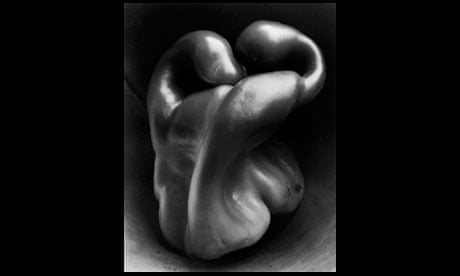
Edward Weston’s photos are very representative of Straight photography. As seen in the picture on the left, Weston focuses on one subject, captures the subject in detail, and includes abstract concepts in his photos. For instance, in the first image, Weston conveys a sense of ambiguity to the audience by photographing this object at a particular angle. The only aspect of Weston’s photography that does not abide by the guidelines of Straight Photography is that some of his works, including the first image here, are not as clearly distinguished from paintings as other Straight Photography. But that could be because of limitations on the camera in his earlier works.

Aaron Siskind

Aaron Siskind was definitely influenced by the Straight Photography Movement. In his works, as shown above, the details are sharp, they provoke thought in the audience, and there is a consistent sense of ambiguity in these images. Though both Straight Photographers, Siskind and Weston do stylistically differ from each other. Siskind seems to specialize in the use of geometric shapes for abstractions, while Weston tilted more toward close-ups and ambiguity.


Andreas Gursky

Andreas Gursky masterfully uses geometric shapes in his abstract photography. Gursky’s utilization of geometric shapes differs from Aaron Siskind’s. The shapes in Siskind’s work do not follow an obvious trend, while Gursky focuses almost solely on buildings with aligned windows or architectural patterns, usually squares. His style is also similar to Straight Photography since his works include sharp details and are very distinguished from paintings. Though his style of photography is similar to Straight Photography, Gursky may not be a straight photographer. The sharp details and abstract ideas in his works may just be part of his unique style and not because he is a Straight Photographer.

Uta Barth

Uta Barth uses blur and manipulating light to create abstract photography. Barth’s works do not allude to the style of Straight Photography as there is little detail nor are they strongly distinguished from paintings. Barth is likely an abstract photographer, but not a Straight Photographer.

Abstract Photos Before & After Editing

We chose these photos without a central theme in mind, but after seeing these pictures together, we found that these three pictures have very interesting connections.

From left to right, the images become more and more blurry. The second image and the first image share traits such as curved + straight composition and visual rule of three. The third image has a similar color scheme to the second.