
Category Archives: Photography
Blog Post 3: Researching the Starting Point
When cameras were first invented in the 1830s, it was used purely for scientific and representative purposes. In the 1850s, advocates such as William John Newton suggested that photography can be artistic.
The Pictorialism movement happened around the 19th century and strived for photography to be recognized by artistic institutions and elevate photography to the same level as paintings. Pictorialists valued the visual appeal of their photos above producing accurate visual representations.
The Straight photography movement in the 20th century was the rise of a new style of photography. Straight photography emphasizes photographing scenes in detail, while also capturing abstract forms. The sharp focus and detail of Straight photographs distinguish them from paintings.
One of the reasons the Straight photography movement was popular at the time was because it had a similar purpose to the Pictorialism movement before it. Both movements wanted to distinguish photography from paintings and elevate photography to higher levels.
Albert Renger-Patzsch


Albert Renger-Patzsch’s photographs were definitely impacted by the Straight photography movement. This is especially noticeable in the picture on the right. Renger manages to include both sharp focus, detail, and abstract forms in his photography. His works are very distinguished from paintings, Renger is a Straight photographer.
Edward Weston
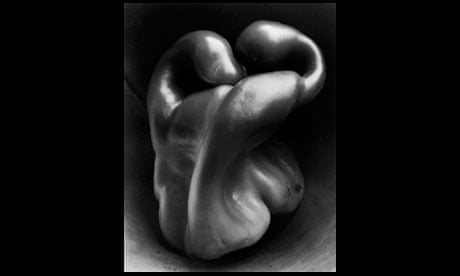
.jpg!PinterestSmall.jpg "Shell - Edward Weston")
Edward Weston’s photos are very representative of Straight photography. As seen in the picture on the left, Weston focuses on one subject, captures the subject in detail, and includes abstract concepts in his photos. For instance, in the first image, Weston conveys a sense of ambiguity to the audience by photographing this object at a particular angle. The only aspect of Weston’s photography that does not abide by the guidelines of Straight Photography is that some of his works, including the first image here, are not as clearly distinguished from paintings as other Straight Photography. But that could be because of limitations on the camera in his earlier works.
Aaron Siskind

Aaron Siskind was definitely influenced by the Straight Photography Movement. In his works, as shown above, the details are sharp, they provoke thought in the audience, and there is a consistent sense of ambiguity in these images. Though both Straight Photographers, Siskind and Weston do stylistically differ from each other. Siskind seems to specialize in the use of geometric shapes for abstractions, while Weston tilted more toward close-ups and ambiguity.
Andreas Gursky

Andreas Gursky masterfully uses geometric shapes in his abstract photography. Gursky’s utilization of geometric shapes differs from Aaron Siskind’s. The shapes in Siskind’s work do not follow an obvious trend, while Gursky focuses almost solely on buildings with aligned windows or architectural patterns, usually squares. His style is also similar to Straight Photography since his works include sharp details and are very distinguished from paintings. Though his style of photography is similar to Straight Photography, Gursky may not be a straight photographer. The sharp details and abstract ideas in his works may just be part of his unique style and not because he is a Straight Photographer.
Uta Barth

Uta Barth uses blur and manipulating light to create abstract photography. Barth’s works do not allude to the style of Straight Photography as there is little detail nor are they strongly distinguished from paintings. Barth is likely an abstract photographer, but not a Straight Photographer.
Abstract Photos Before & After Editing


We chose these photos without a central theme in mind, but after seeing these pictures together, we found that these three pictures have very interesting connections.
From left to right, the images become more and more blurry. The second image and the first image share traits such as curved + straight composition and visual rule of three. The third image has a similar color scheme to the second.


Blog Post 1,2: Starting Point, Definition
Initial Thoughts:
This unit strongly intrigues me because I was never really exposed to abstract photography before and the 4 images on the DX post seem very interesting and different from my previous understanding of photography.
What do you think is meant by: “Abstract photography can be defined as capturing images in which the subject isn’t the most interesting element.”
From my first impression of abstract photography. I think this statement means that the most interesting element of abstract photography is not what is physically included in the picture, but instead, the thoughts and emotions the picture evokes in the audience.
What I want to know about abstract photography:
- Since abstract is in its name, are there no rules for abstract photography?
- Is there any relation between abstract art and abstract photography?
What I learned from the video:
- It isn’t easy to abstract something
- Abstract techniques have developed rapidly over time: Plane photos were considered abstract in the past because planes were rarer than now.
- Some abstract techniques are blowing things up and utilizing reflections.
Definition of Abstract Photography:
Images in which the subject is not the most interesting element.
WRONG! Contact Sheet


Photography Task 3
What is the purpose of rules in photography?
Following rules in photography generally makes your photos more understandable and visually appealing for the audience. Rules can also introduce new photographers to the basic principles of photography, building a foundation of photography knowledge for them to utilize in more creative ways in the future.
In your mind, what are some of the most important rules in photography?
Focus and light, in my opinion, are the most important rules in photography. Focus is important because it draws the audience’s attention to what the photographer chooses to emphasize. This can strengthen the message the photographer is trying to convey, or just make the photo easier to understand and more appealing to the audience. Focus also often helps the audience develop a stronger impression of the photo since only the most important element (s) are emphasized. Light is important because light is a large determining factor for the mood of photos. Knowing how to manipulate the source and quantity of light gives you much more control over what emotions you want to convey through your photos.
When might it be a good idea to deliberately break the rules?
When an idea or message will be best conveyed without the constraint of a certain rule, if you think your photo will look better not following rules, or if breaking the rules is part of your intent.
Do you think it is possible to break rules if you don’t know they exist?
Yes, rules exist even without we knowing so it is possible to break rules if you don’t know they exist since rules exist without us knowing so. But you won’t know that you were breaking the rules.