Ryan

"I have no special talent. I am only passionately curious" - Albert Einstein

Author: Ryan (page 2 of 3)

Blog 6 : Photo Safari


Compare your images with the drawings. Which ones worked and why?

Which ones didn’t work so well, and why?


Image 1:

I think this image represents figure 6 because the backgrounds are both clean filled with negative space and a circular object in the middle.

Image 2:

This image should represent figure 5 because of the vertical lines, however when the image was uploaded it was rotated so the lines are now horizontal.

Image 3:

This image represents a zoomed in of figure 9. The golden lines separates 2 materials into four pieces.

Image 4:

This image also represents figure 5 because of the lines which are supposed to be vertical, also the blank background attracts focus to the lines.

Image 5:

This image shows figure one, there is a  direct contrast between the top half of the photo and the bottom half. Also the image is fairly separated, the portions are balanced.

Image 6:

I think this image could represent figure 8 because of the tiny fairly spaced circles, however I could make the connections between the figure and the image clearer by taking close ups of the tiny holes when directly in front not on the side.

Image 7:

I think this image could represent figure 4 because of the thick black horizontal lines and the small white spaces between them.


I believe all of my images throughly represented the drawings because they all showed the main components in the drawings. I think images 1, 5 and 7 best represents the drawings figure 6,1 and 4.

I think image 2 didn’t really work because there were too many lines in that one image but the drawings only had two lines. Also there were 2 colors for the background which the drawing only had one color for the background and no distracting elements.


Blog 8 : Statement of Intent

Light & Shadow

My triptych will explore the area of light and shadow, revealing how they shape mood, depth, and emotion. I want the viewers to feel a sense of mystery, contrast, and appreciation of beauty in both darkness and illumination.

For inspiration, I will search for photos that could capture dramatic lighting, natural shadows, unique-shaped shadows, and heavy contrast that could emphasize its texture and form. For example, the buildings at 798 would create large geometric shaped shadows on the ground, or I could create a contrast between the buildings and the sky.

The light and shadow could tell a story of balance, contrast, and the unseen beauty in the world.

Blog 5 : Analysis of a photograph

Dunes, Oceano      Edward Weston,

“Abstract photography can be defined as capturing images in which the subject isn’t the most interesting element. Albert Renger-Patzsch, Edward Weston and Aaron Siskind photographed the ordinary to reveal their beauty. Uta Barth reversed the typical use of the camera, shooting out of focus and Andreas Gursky photographs the repetition of elements. During this unit you will investigate appropriate examples of abstract photography and respond in your own way.”

3 Things:

  1. Shape, the curves of sand dunes create organic flowing forms and lines
  2. Tone, contrast of light and shadows on the dunes, highlighting 3 dimensionality.
  3. Texture, the texture of sand adds a tactile quality to the image

If you were the photographer, what title would you give it?

I would call it “Sculpted By Wind” because the waves sand dunes are made by the natural blowing winds, it emphasizes the abstract and sculptural qualities of dunes.

Describe the use of line, shape, pattern, texture, tone, and focus

  • Line: The soft, flowing lines created by the ridges and curves of the dunes, guiding the viewer’s eye through the composition.
  • Shape: The dunes form organic, rounded shapes that resemble waves or sculptures, creating a sense of movement and fluidity.
  • Pattern: The repetitive ridges and valleys of the dunes create a natural pattern, adding rhythm to the image.
  • Texture: The dunes have a visual, even material aspect due to the minimal visibility of the granular sand texture.
  • Tone: The dunes’ three-dimensional structure and depth are enhanced by the dramatic tonal contrast produced by the interaction of light and shadow.
  • Focus: The image’s abstract, almost surreal aspect is maintained while the fine details of the dunes are captured by its great focus.


Blog Post 7 : Mind Map

Blog Post 3 : ABSTRACTION IN PHOTOGRAPHY

Pictorialism Movement:

The pictorialism movement was a photography movement and technique in which photographers used soft focus and darkroom tricks to create artistic, emotional images in the late 19th to 20th century to make digital photos look like paintings.

Straight Photography Movement:

Straight photography emerged in the 20th century, it focused on clear and sharp images with the camera’s ability to accurately depict reality.

Pictorialism: Artistic, soft focus, manipulated images.

Straight Photography: Clear, sharp, unmanipulated images.

Straight Photography was popular because it showed the unique power of the camera capturing reality clearly, without making the image look like a painting.

Influence on Edward Weston and Aaron Siskind

Edward Weston used sharp focus to capture and create detailed images of natural objects.

Aaron Siskind focused on textures and patterns, creating abstract but sharp images.

Gurskey & Barth

Gursky and Barth are more of modern abstract photography than traditional Pictorialism or Straight Photography photographers. Because Gursky focuses more on Straight Photography because of his sharp, detailed images and Barth’s work is abstract but doesn’t use traditional Pictorialist techniques like soft focus and darkroom manipulation.


Blog 2 : Contact Sheet

Blog 4 : Formal Elements of Photography

Formal Elements – Are fundamental visual elements that contribute to the composition of an image. These elements help guide the viewer’s eye to create a visually compelling image.

Line:

Lines are basic visual elements that define shapes and create structures. They could be curved, straight, vertical, horizontal, or diagonal to guide the viewer’s eye through an image to a focal point.

Shape:

Shapes are two dimensional areas and geometric shapes. Such as squares and circles, they can create abstract compositions and structure or form in an image.

Pattern:

Patterns are designs or shapes that are repeated that creates visual interest and rhythm. Examples like leafs in nature and human made textiles.

The Science Behind Nature's Patterns | Smithsonian

Fessenden, M. (2016, May 10). The Science Behind Nature’s Patterns. Smithsonian. https://www.smithsonianmag.com/science-nature/science-behind-natures-patterns-180959033/

Texture:

Texture is the surface quality of a object, it could add realism and depth to an image. Examples like surface of wood or paint coming off walls.

18 Stunning Examples of Patterns in Photography | Photzy

Photzy. 18 Stunning Examples of Patterns in Photography. Photzy, https://photzy.com/18-stunning-examples-of-patterns-in-photography/. Feb 13 2025.

Tone:

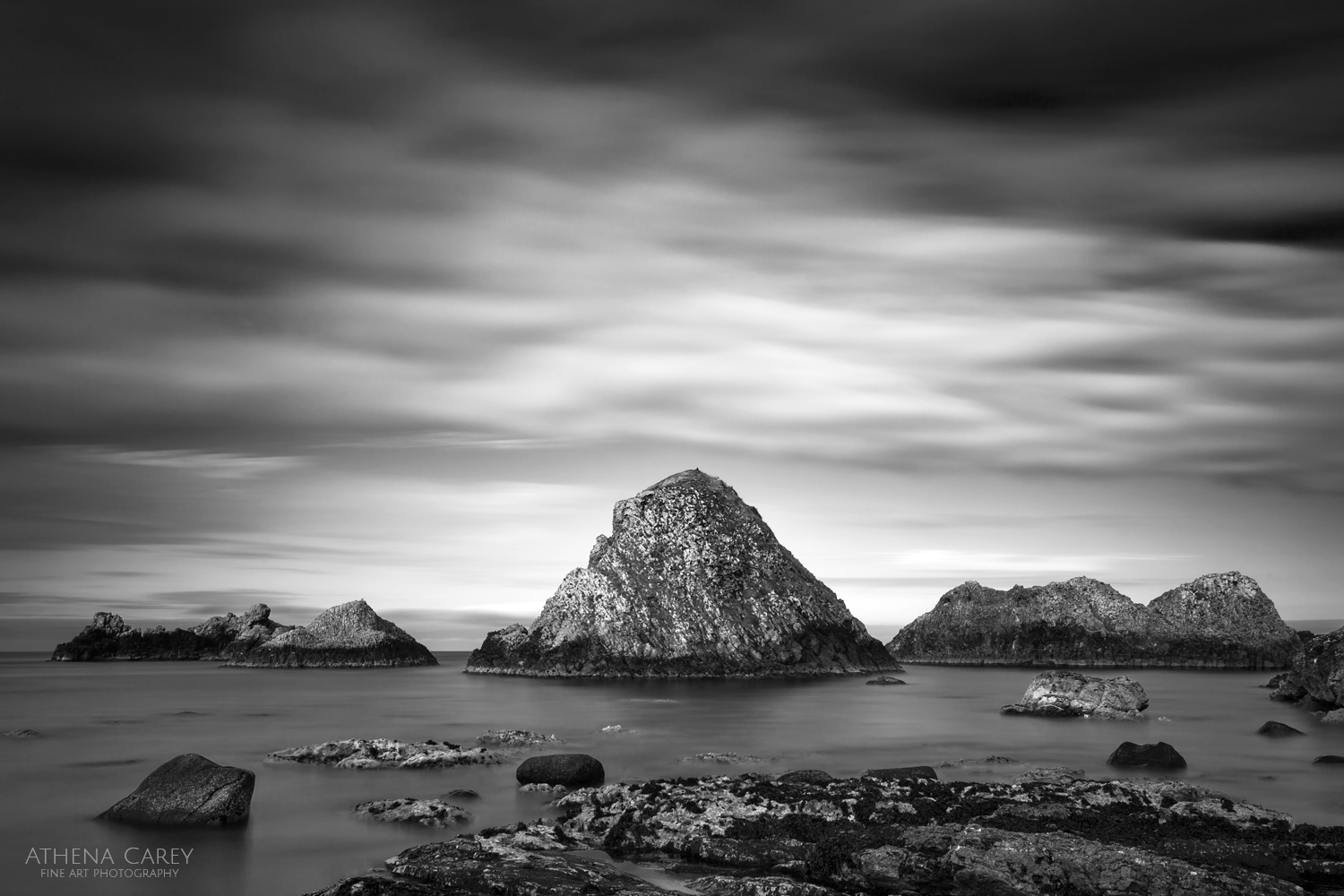
Tone is the lightness and darkness of color, it could create contrast, depth and mood in an image.

Better BW Photography Using Tonal Contrast

Carey, Athena. Fine Art Photography. Visual Wilderness, https://visualwilderness.com/post-processing/using-tonal-contrast-better-bw-photography. Feb 13 2025.

Focus:

Focus refers to the sharpness and blurriness of the photo, which could direct the viewer’s attention towards a important point or areas.

It is almost impossible to only have one element in a photo, for example lines must have some parts dark and some parts light to be visible, a shape requires color and tone to stand out.

Context in Photography

“Wrong” Baldessari, 1967


A “bad” photo could be a “great” photo when it fully displays the author’s emotion and message. Even if the image with technical issues or mistakes can have an impact if it successfully captures the important moment or by bringing strong emotions like the author’s feelings of pain, pleasure, or discomfort, etc. With the message and feelings conveyed, the image would be perceived by the audience and thus giving a attractive factor to it.

The photo “wrong” brings a feeling of isolation, the figure is standing alone in a empty and spacious setting, creating a sense of detachment and solitude. The message is slightly difficult to interpret, in my opinion the figure is in a stage of introspection or exploring the themes of identity. Because the individual’s presence in the landscape feels very odd, it could also suggest how the individual is facing a struggle of unacceptance and unwelcome in their community, standing alone next to a tree brings a feeling of alienation. I believe this photo is considered a “great” photo because it conveys a message and emotions towards the audience.

The context of the picture would make a great difference. Cultural and social factors could apply, if a “bad” image is connected to issues in the  society, which would raise an importance in the image. While the standard definition for a great photo could be based on technical skill, the mental values can also play a huge role in weather the photo is considered “good” or “bad”. A strong relation between the photographer’s subject and background can also elevate its impact and evoke emotions. In conclusion, a “bad” photo could also become a  “great” photo as long as it successfully represents the message and emotions the photographer is conveying then it would be considered as a “great” photo.


Citations:

Baldessari, John “Wrong” Photograph. blogs.isb.cn, ISB. Accessed 18th January 2025, https://blogs.isb.cn/,  Accessed 18 January 2025.

Baldessari, John “Wrong” Photograph. Dragon’s Exchange, ISB, 18th January 2025. https://dx.isb.cn/dash/#/classroom/648607/sections/lesson/344114/page/344116, Accessed 18 January 2025.


Capstone Project Goal 14

Huang Ryan

Andrew McNeice

Humanities

June 2, 2023

How Do We Reach SDG Goal 14

8 million tons of plastic enter the blue ocean each year. “That’s similar to one truckload dumped into the sea every minute of the day” (Bryce). SDG 14 life below water is about marine life under the ocean, “conserve and sustainably use the oceans, seas and marine resources for sustainable development”. Also to acknowledge human effects on marine life and how to help marine life that is in danger. People do not acknowledge the problem under water and the damaged marine habitats. Waste management has been a problem for humans because there is a limited amount of space to store the garbage on land. One of the most compelling factors is How can citizens and governments help to protect marine habitats?


Due to the fact of ocean pollution, plastic kills fishes and other marine animals like turtles and whales. “About 10% of the plastic waste in the ocean comes from ships that lose cargo at sea, abandoned fishing nets and longlines with Styrofoam attached to it” (Bryce). Because of the plastic or gas pollution like carbon dioxide. There are lots of garbage floating around like plastic water bottles, abandoned plastic fishing nets, plastic bags or straws are common garbage’s in the ocean. Fishes get strangled to death in the fishing nets and some fishes like whales eat Bactria for food, it’s simple for them to suck microplastic in their bodies, the micro plastic are hard to digest so it will stay in their body and affect the health of the marine animal and carbon dioxide kills corals underwater. In the last decade China has been mismanaging the waste. That means most of the garbage end up in the environment, instead of being incinerated, properly buried, or otherwise safely dealt with the trash and waste including plastic gets carried into the ocean. In 2010 China’s mismanaged waste rate was 76% and in 2020 the mismanagement waste rate was 7%. In 2010, the mismanaged city waste rate was 9.28%. By 2019, it fell to 0.4%. “In cities the drop was from 39.39% to 1.2% over the same period.” (chinadialogueocean.net)


Why do overfishing cause problems in the ocean? “The definition of overfishing is taking too many fish from the ocean; it effects the number of individuals removed is more than the breeding or recovery rate in population.” (sdgs.un.org) This leads to drop of population in this specie, which could cause the ecosystem or the environment to be unbalanced.” (Gaynor). Humans right now are eating double the amount of seafood people eat half a century ago. To satisfy the market needs, people start to extract seafood more and more, then marine life in the ocean will start to decrease. Some fish species will end up with more population than other species so that would cause an unstable food-chain or marine ecosystem. How do we stop overfishing? There are three main solutions, first of all apply regulations for fishing nets, thousands of nets catch unwanted marine species every day or abandoned fishing nets with marine animals tangled in it and strangled to death. People can stop this by setting up areas for placing nets and areas for fishing. Most of the nets are made of plastic. Did you know every piece of plastic ever manufactured still exists today, and when it enters the ocean, its effects can be felt for centuries. Globally we produce more than 300 million tons of plastic waste each year, but we have only recycled and reused 9% and most of the waste ends up in landfills. But why only 9%? Most of the items we see in daily life are labeled recyclable. Just like the MacDonalds bags or cups, there’s always an recycle sign printed on it. The problem is 50% of the plastic produced are actually single use. One example is about Australia. “Australia produces almost 3 million tons of plastic per year, of which less than 12% is recycled. Alarmingly, up to 130,000 tons of that plastic will wind up in the ocean as plastic pollution each year. Considering each person produces (or uses) roughly 130 kg of plastic, it means that about 30 kg of each person’s waste could end up in the ocean.” (wwf.org). A lot of people might not know about the pacific garbage patch, it is a huge island of waste most of it is plastic, it is 620,000 square miles which is 1.6 million square kilometers big, it is 3 times the size of France! It is a huge island of trash in the sea between California and Hawaii. It is accumulating because the water flow in the ocean brings plastic from different places to the garbage patch, it is getting bigger due to most of the plastic are not biodegradable. So many marine animals are trapped in the trash and dies because they think that it might be food and when they go up, they get strangled into the garbage. That’s why we must try to clean up the garbage as much as possible, if you see trash then just pick it up and if you could then volunteer to clean oceans and beaches.


What are some effective solutions to stop marine animals from dying? The ocean covers 70% of our planet, produces 50% of the oxygen we breath, shelters 90% of the biodiversity on planet and regulates our climate. That’s how important a healthy ocean is! So how can we help? First you could donate online to ocean helpers. I found two websites one is Pure Ocean the other is Sea Ocean alive. “Pure Ocean is an endowment fund, that aims to raise funds to support innovative projects for the preservation of fragile marine ecosystems and biodiversity.”

(pure-ocean.org). One of their projects is Reef Reborn, which is enhancing the larvae survival to rebuild the great barrier reef located near Queensland, Australia. “About 1429 miles wide and 133,000 square miles in size it is the largest coral reef system in the world.” (quora.com). So that means it is habitat to hundreds and thousands of marine animals! Due to the warming of waters about half of the great barrier corals have died within the last 20 years! Pure ocean saves the corals by feeding larvae with lipid-cocktail nanoparticles, it helps larvae with growing more energy to survive and increase growth rates. So, after some time the corals will grow back, and the marine animals will have their habitats back. Another one is Sea Ocean alive which mainly focuses on cleaning the garbage, trash and waste out of the blue ocean. “Sea Oceans Alive is dedicated to raising awareness and providing education on the importance of conserving marine and freshwater ecosystems. By developing and implementing sustainable solutions, we aim to protect the diverse habitats that make up our oceans, rivers, and streams, ensuring their continued role in supporting life on Earth.” (seaoceansalive.org/) They help the ocean by doing clean up, mobilizing volunteers to clean the waste debris in the ocean. They educate people about pollution through workshops, webinars, and educational materials. They create policies that protects the habitats and aquatic life and advances sustainable practices in areas such as fisheries management. Finally, research and innovation, they collaborate scientists and improve the understanding of the ocean. If you don’t want to donate money then you could help at a nearby stream, river, or beach, to help clean up the garbage.


If we keep polluting our ocean like this it will affect the number of species in the ocean and the population of marine animals or even cause an unstable environment, habitat, and home of the fishes. It will also affect human health too because seafood is a huge factor in human calcium and protein intake, so we would eat the polluted seafood which has micro plastic in the fish’s body and would heavily affect the health of human organs. We should acknowledge this problem and save the ocean by using sustainable materials, better garbage management and setup regulations for overfishing. Best to start from yourself and volunteer or donate money to ocean cleaning companies. With these solutions we could save the marine animals and the planets biggest ecosystem together.


Work Cited Page


Plastic pollution in the marine environment:

G.G.N. Thushari, and AbstractPlastic pollution is recognized as a severe anthropogenic issue in the coastal and marine ecosystems across the world. Unprecedented and continuous accumulation of growing plastic contaminants into any respective aquatic ecosystem by the anthropog. “Plastic Pollution in the Marine Environment.” Heliyon, 27 Aug. 2020, www.sciencedirect.com/science/article/pii/S2405844020315528.


How does plastic pollution affect the ocean?

Bryce, Emma, and Mary Flora Hart. “How Does Plastic Pollution Affect the Ocean?” China Dialogue Ocean, 9 Mar. 2022, chinadialogueocean.net/en/pollution/14200-how-does-plastic-pollution-affect-the-ocean/?gclid=CjwKCAjwgqejBhBAEiwAuWHioKTVFOsK_S-jraRVOTW5lG5nqAC8KSa54uGYe2a2U9vQnZ8oVnVyThoCk60QAvD_BwE.


How China is stemming the flow of ocean plastic

“How China Is Stemming the Flow of Ocean Plastic.” China Dialogue Ocean, 15 Feb. 2022, chinadialogueocean.net/en/governance/16503-how-china-is-stemming-the-flow-of-ocean-plastic/?amp=&gclid=Cj0KCQjwmtGjBhDhARIsAEqfDEePBAuT92XV8t1AezHESa65eIE0k2w6BnY6XSudr_u62035SStzwXIaAq9GEALw_wcB.

7 Solutions to Overfishing We Need Right Now

Igini, Martina. “7 Solutions to Overfishing We Need Right Now.” Earth.Org, 20 Mar. 2023, earth.org/solutions-to-overfishing/.

Pure ocean donation

Pureocean. “Pure Ocean Home.” Pure Ocean Fund, 7 Mar. 2023, www.pure-ocean.org/en/.

Sea ocean alive

“Sea Oceans Alive.” Sea Oceans Alive, www.seaoceansalive.org/. Accessed 2 June 2023.

MSC

“Sustainable Fishing: MSC.” MSC International – English, www.msc.org/?gad=1&gclid=Cj0KCQjwyLGjBhDKARIsAFRNgW9J62l5imlqDR-fgJ_VCXYUmQDQ6Tlqd4ypYPACY19Fzy7ECLST9NcaAp4QEALw_wcB. Accessed 2 June 2023.


Cuban Revolution Journal

Go to this Sway
Older posts Newer posts

© 2025 Ryan

Theme by Anders NorenUp ↑

Skip to toolbar