Starting Point:
Abstract photography can be defined as capturing images in which the subject isn’t the most interesting element. Albert Renger-Patzsch and Aaron Siskind photographed the ordinary to reveal their beauty. Uta Barth reversed the typical use of the camera, shooting out of focus and Andreas Gursky photographs the repetition of elements. During this unit, you will investigate appropriate examples of abstract photography and respond in your own way.
“Abstract photography can be defined as capturing images in which the subject isn’t the most interesting element.”
To me, this sentence means that abstract photography has to do with taking photos in unorthodox ways, adding onto the first task we had of taking “wrong” photos. In abstract photography, I assume that we will not be capturing pictures in a “normal” way, but instead, the photos we take will be slightly more confusing and perhaps makes the surroundings of a picture more intriguing or in a way significant than the “main” subject.
How can photography change our relationships to things?
Photography can help the viewer discover new perspectives on an object or idea. Additionally, photography can allow people to engage with a subject visually to gain more of an understanding of it or learn more about what they are viewing. Photography can create a place where viewers can discover the beauty or even the destruction of the many things in our world.
abstract – adjective:
relating to or denoting art that does not attempt to represent external reality, but rather seeks to achieve its effect using shapes, colours, and textures.
Methods I want to try:
- Reflections (glass, mirror, water)
- Shadows
- Light movement
- Glass distortion (water)
- Black and white
- Water reflection with mirror
My Definition of Abstract Photography:
Abstract photography captures images that we may be unused to seeing in daily life and removes the audience from a typical reality.
Abstraction in Photography:
Pictorialism Movement:
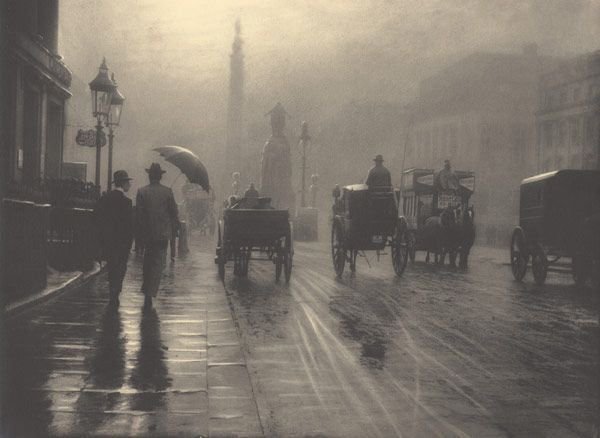
The Pictorialist Movement in photography was a period in the 1900s when many believed that photography was not an art, and could not be compared to art as it was all mechanical, and had no handmade craft put into it. To gain recognition for the art of photography, the pictorialists would put vaseline on their camera lenses, scratch the negative space of the image, or put chemicals on their pictures to replicate the texture of brush strokes. These alterations to the photographers’ work were all aimed at making their pictures seem more like art at the time.
Straight Photography:
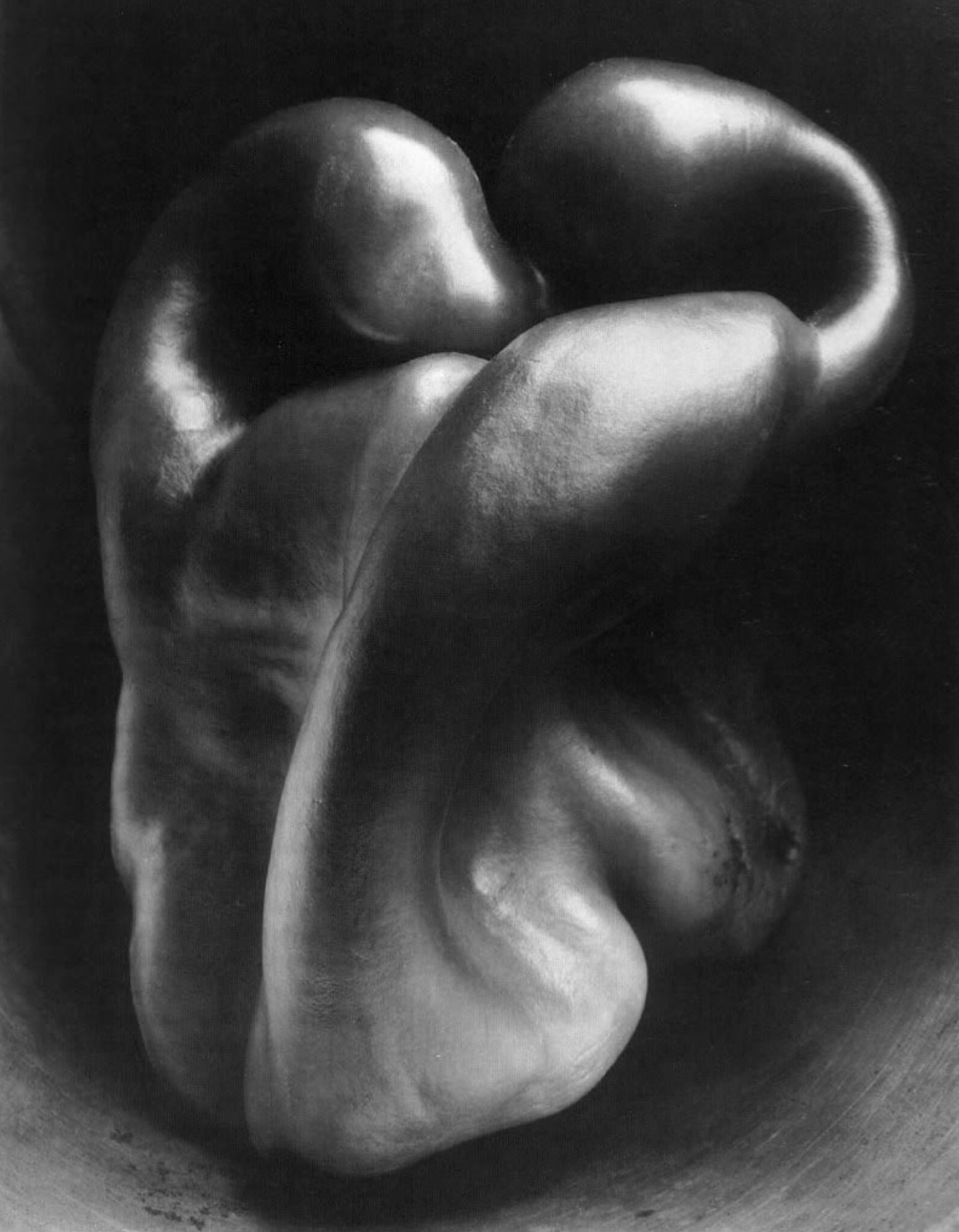
The Straight Photography Movement was a major change from the previous pictorialist movement, where Paul Strand discovered the camera’s ability to capture shapes, shadows, and texture simply and with focus, without altering any pictures as done during the pictorialist movement. The Straight Photography Movement forced people to face reality without manipulating what people saw to be romanticised, and as a way of dwelling on the past. During this movement, photographers learned how to use shadows cast by different objects to capture a photo that could be made slightly more obscure by simply rotating the image.
Edward Weston and Aaron Siskind:
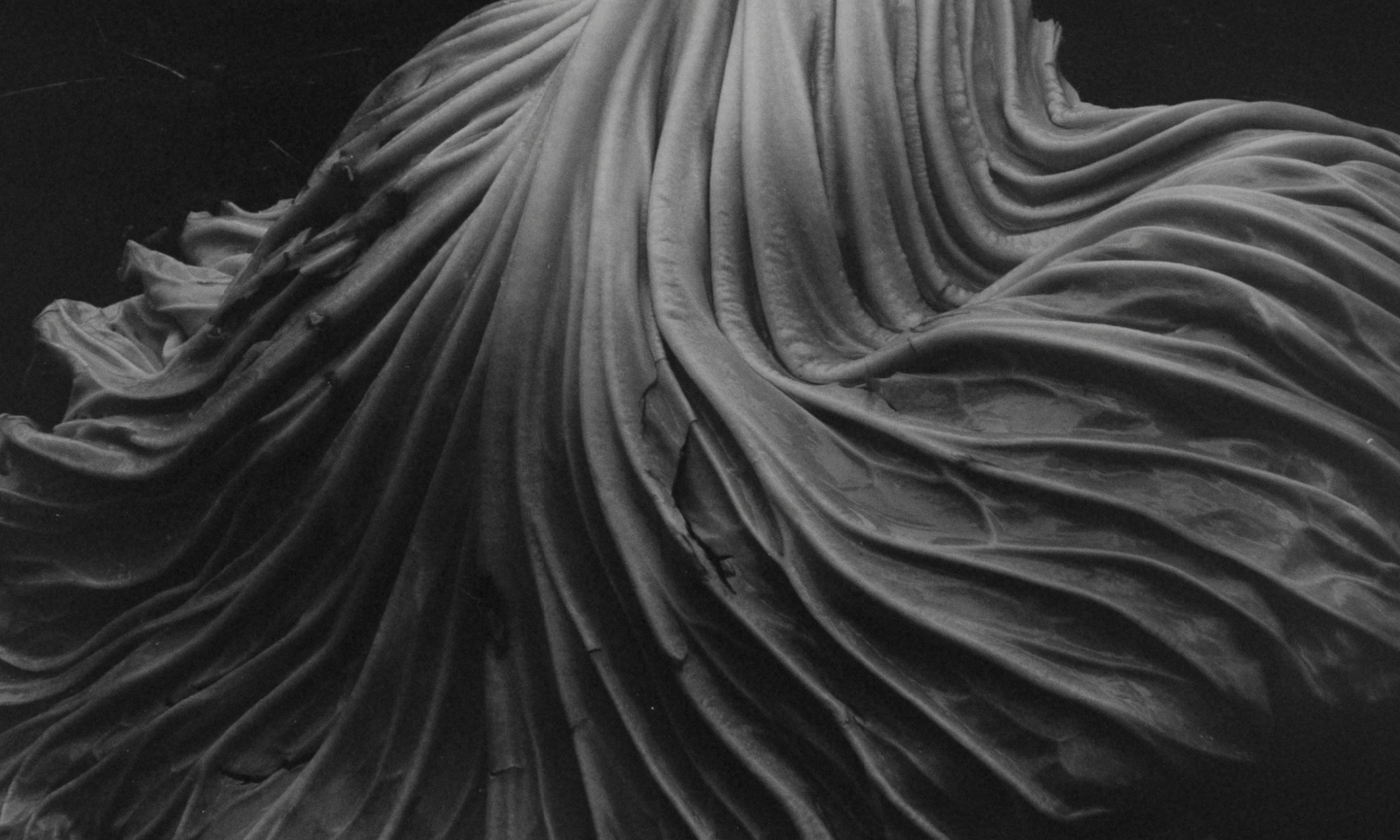
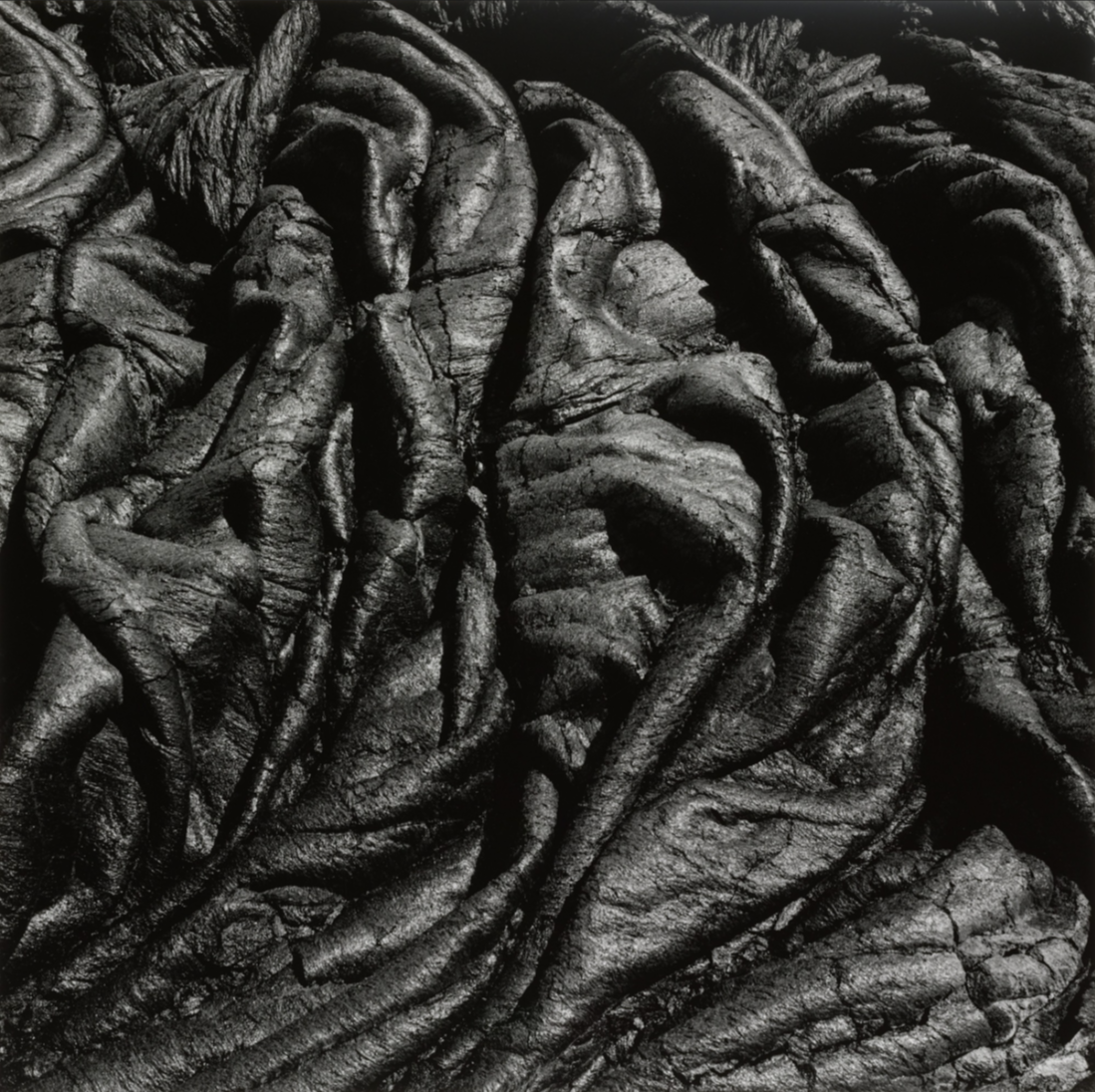
The two photos above were taken by photographers Edward Weston and Aaron Siskind, respectively. These two artists were both influenced by the straight photography movement, as they both have captured complex shapes and textures while producing straight, unmanipulated images of what they were trying to photograph.
Andreas Gursky and Uta Barth:
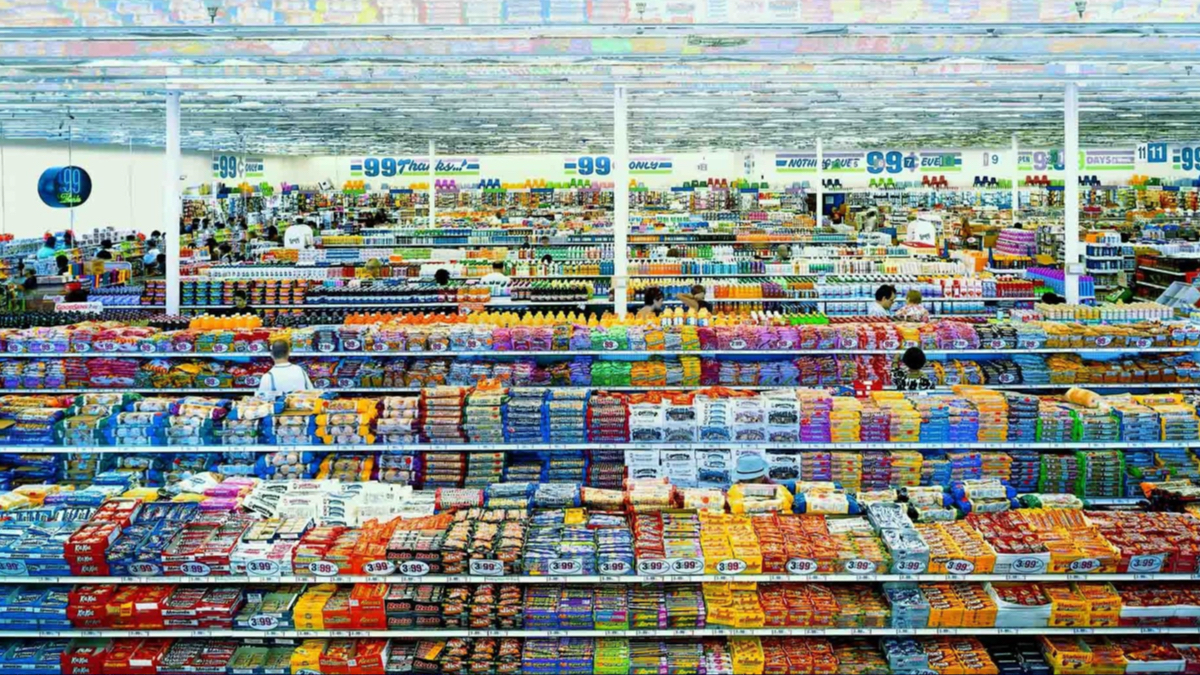
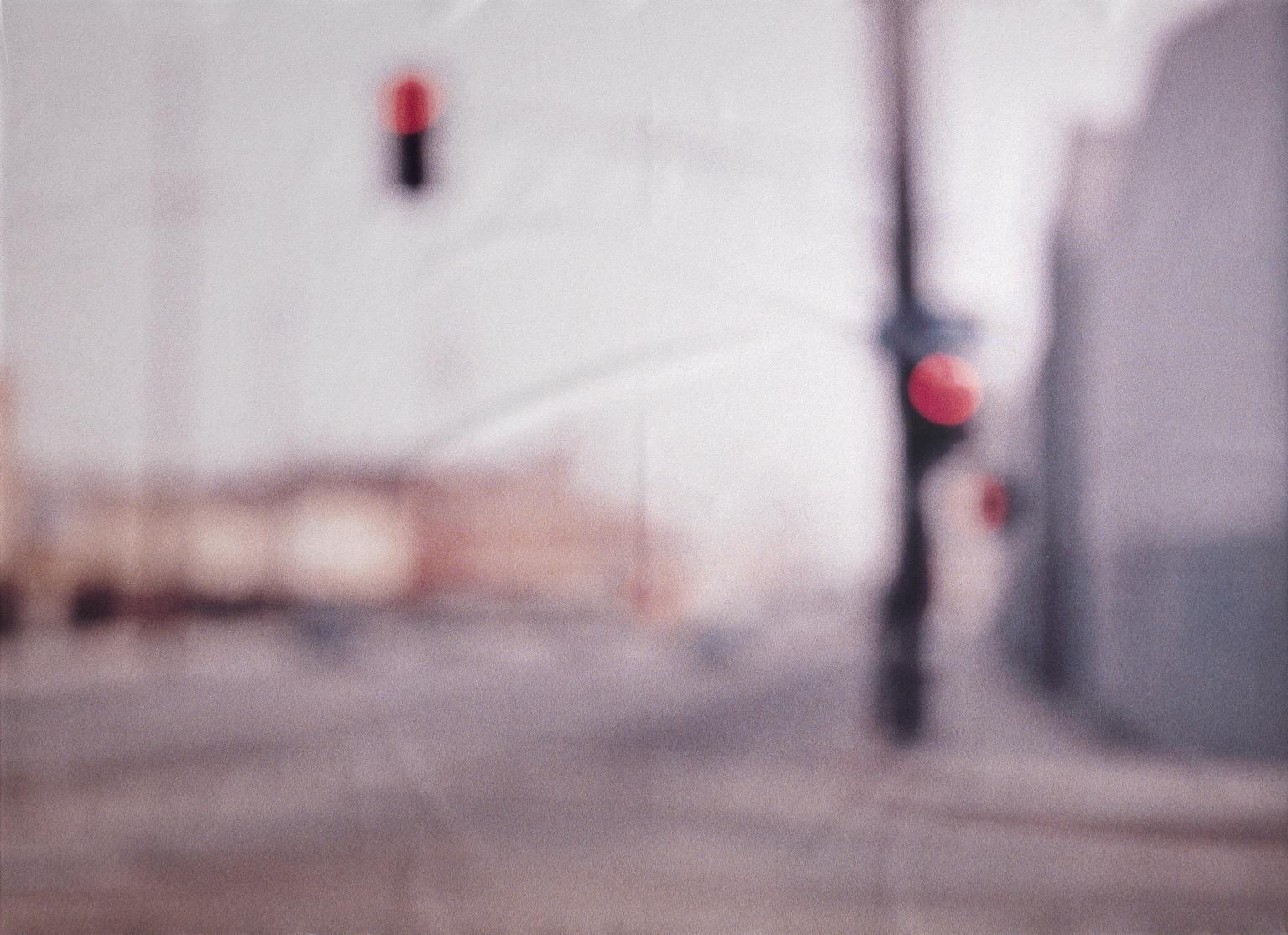
Unlike the works of Weston and Siskind, photographers Andreas Gursky and Uta Barth use more pictorialist methods in capturing their photos. Specifically, Gursky uses more pictorialist ways in his photo on the left where he has altered the image using digital services to make the photo brighter, as he desires by increasing the exposure, creating this almost painting-like colouration. On the other hand, Barth has purposefully blurred the focus of this image of a traffic light, imitating the pictorialist method of putting vaseline onto the lens of the camera to romanticise the image.
Works Cited:
Williams, Nigel “When Photos Looked Like Paintings – Pictorialism” A Flash of Darkness, 11 March 2024, https://flashofdarkness.com/pictorialism/. Accessed 23 August 2025.
Brown, Hudson “The Greats: How Edward Weston Pushed Photography into Modernity.” Urth Magazine, 9 November 2020, https://magazine.urth.co/articles/edward-weston-photography. Accessed 23 August 2025.
Cercle, Maxime “Aaron Siskind viewpoint on magma.” Cercle Magazine, 26 February 2019, https://www.cerclemagazine.com/en/magazine/articles-magazine/aaron-siskind-viewpoint-on-magma/. Accessed 23 August 2025.
Witek, Dominic “10 Things you need to know about Andreas Gursky” Artsper Magazine, 17 July 2013, https://blog.artsper.com/en/a-closer-look/10-things-to-know-about-andreas-gursky/. Accessed 23 August 2025.
“Field #20” Tate, https://www.tate.org.uk/art/artworks/barth-field-20-t07627. Accessed 23 August 2025.