Street Photography –
Street photography is the art of capturing people in their lives without staging or faking emotions or scenes. This allows the photographer to capture the interactions of people with others and/or their surroundings. Street photography could also include more portrait-like shots of people to capture facial expressions and emotions, or zoomed-out shots that capture the essence of action and movement.
In street photography, we must consider the main subject and the subject’s surroundings. Additionally, street photography tells a story without the story being explicitly told. This allows the audience to get a glimpse of another person’s life or story without actually knowing them.
“When you have to ‘explain’ the backstory of a street photograph, it is like explaining a joke. Funny jokes don’t need to be explained.”
-Eric Kim
We want to capture:
Everyday life

The people of China

China and Her Food

Photography Techniques for Street Photography:
- Work the Scene
Working the scene relates to how a photographer tries to capture a scene while changing angles, positioning, distances, and more elements, rather than taking the simple, obvious shot and moving on to a new scene. Working the scene also allows the photographer to observe how the scene itself changes over time and how elements such as lighting, shadows, and people in the shot change. When photographers work the scene, they also take numerous shots to capture a story, and most of the time, the first photo is not the best shot.
- Composition – rule of thirds/center
The composition of a photo is important in all pictures – not just in street photography. However, unlike in other types of art, in street photography, we cannot rearrange the positioning of the objects in the picture and the lighting of the photo. It is essential to consider the scene and how the camera is positioned to capture the shot, rather than focusing on the people in the shot initially. Photographers use the rule of thirds to create a sense of harmony in the shot that results in a normally well-composed shot.
- Concentrate on framing
The framing of a street photograph directs the audience’s attention to the main subject that was the focus of the photo. Framing can also create a sense of depth to a photo, as the frame itself is normally closer to the photographer, which essentially creates a foreground and background for the photo. Framing also lets the audience have insight into what the photographer could see when they shot the picture in the first place, which makes the photo even more engaging for the viewer.
- Triangles
Triangles in a photograph can be created with three components in the photo that are evenly spaced, creating an invisible triangle between the subjects. Triangles or groups of three create a sense of balance and harmony in a photograph, which in turn creates a frame in a way as well. In the end, the triangles in the image may not be intentional but can be discovered when you look hard enough.


These are the works of Josef Koudelka, utilizing triangles to entice the audience, and Eric Kim’s deduction of the ultimate number of triangles used in this one shot.
- Balance and Harmony
“The rule of balance states that images with evenly distributed visual elements are visually pleasing and thus are highly aesthetic.” In photography, most of the time, the image is more appealing when there is distinct symmetry or balance in the photo. However, in street photography, people in the photo will often disrupt the balance or harmony of the shot. Harmony is all that we see that is ordinary and boring, but tension creates a break in that mundaneness. Tension in a harmonious photo elicits a story.
- Avoid Distractions
Many distractions in street photography can come from the background of a photo. This background could have too many things going on at the same time, which draws focus and attention away from the main subject of the photo. This distracting background can be avoided by cropping the photo or making selective choices in the background initially.
Photographers:
- Fan Ho:
“Photography is a universal language that transcends the barriers of culture and time.”
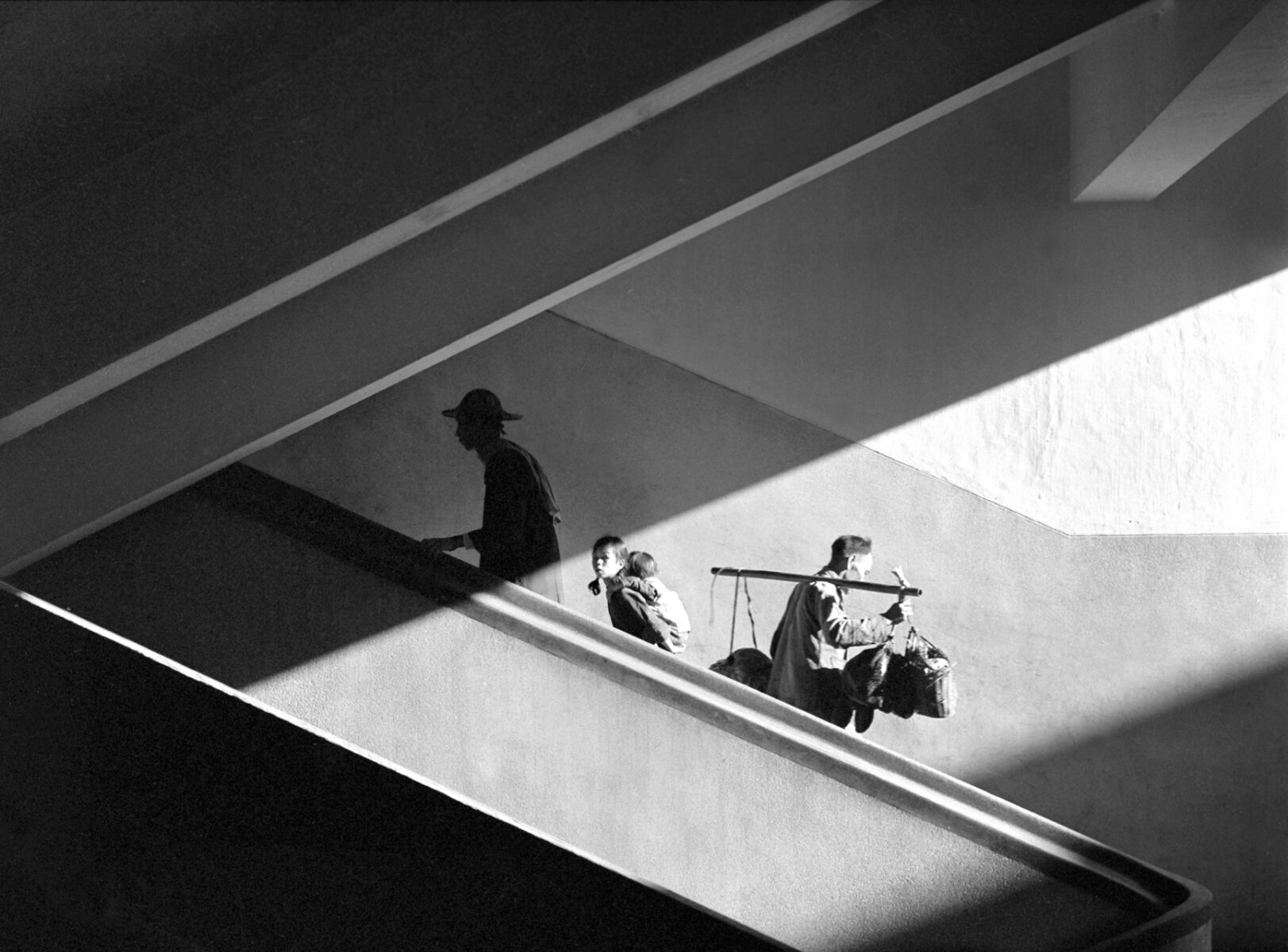
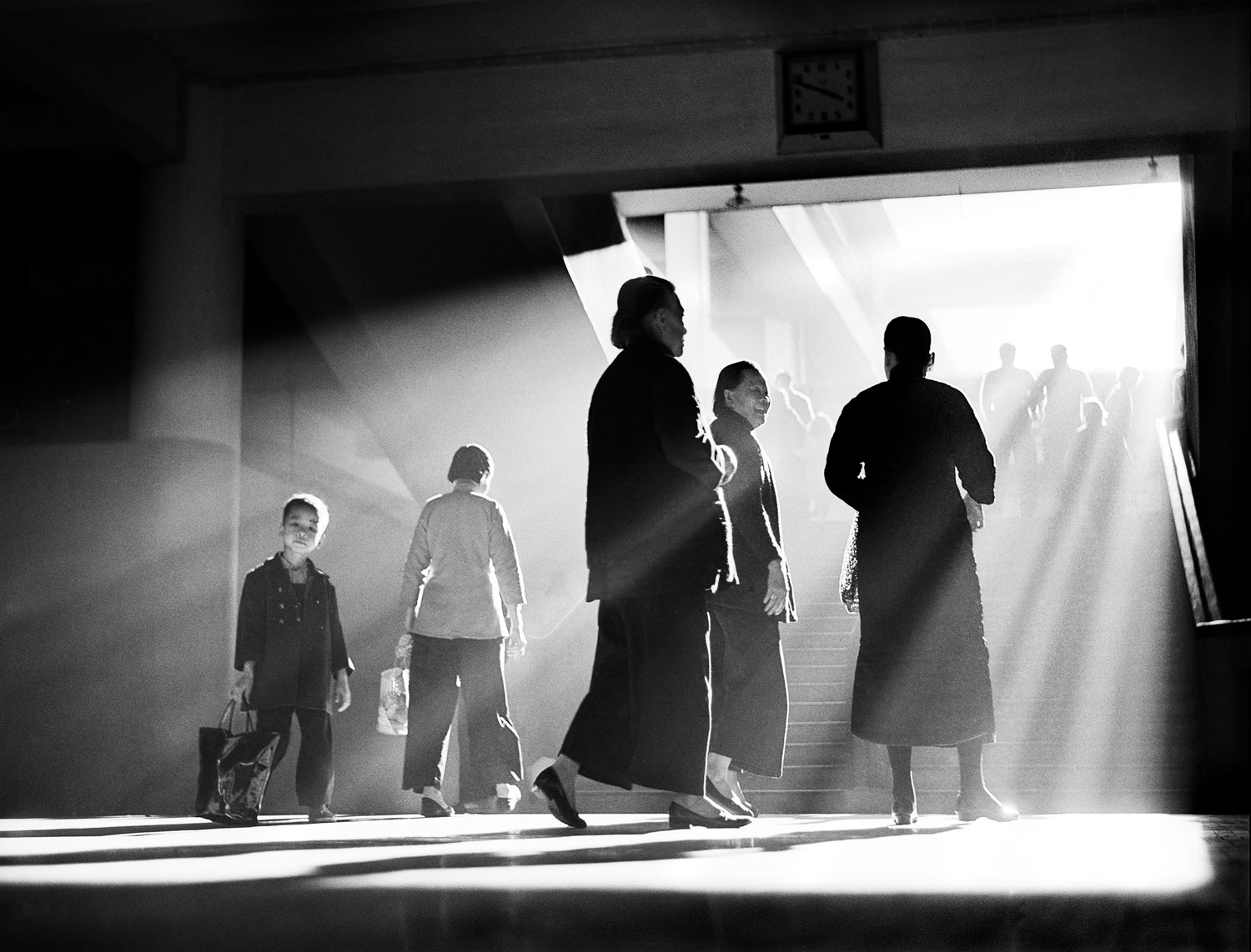
Fan Ho was a Chinese photographer who captured the streets of Hong Kong through photographs in the 1950s and 60’s. Ho is renowned for his ability to capture light and shadow in black-and-white images. The shadows he captures frame a subject and help portray a story of those in the photo. Fan Ho’s works also convey ideas of movement and emotion in the bustling 1950s Hong Kong cityscape.



- Daido Moriyama:
“Photography is the act of “fixing” time, not of “expressing” the world. The camera is an inadequate tool for extracting a vision of the world or of beauty. “
Daido Moriyama is a Japanese photographer best known for his confrontational, direct black-and-white photographs of Tokyo’s streets. Many of Moriyama’s works highlight high contrast to make the main subject pop out from the background. His photographs also depict urban life in Japan after the war, which helps to show the differences between tradition and the modern world.

.jpg)


- Saul Leiter:
“Painting is about making something. Photography is about finding something.”
Saul Leiter was an American photographer well known for his photographs of New York City during the 1950s and 1960s. At the time, his colour photography brought him fame and showcased the beauty of America’s colourful streets, when other photographers were still capturing the world in black and white. Leiter’s colour photography highlights the focus of a photo, where he makes the image more distorted and layers it to create more depth.


Works Cited:
Epes, Anthony “Tips for Working the Scene to Take Your Image from Good to Great” Digital Photography School, https://digital-photography-school.com/tips-for-working-the-scene-to-take-your-image-from-good-to-great/. Accessed 26 September 2025.
“How to use, and break, the rule of thirds.” Adobe, https://www.adobe.com/creativecloud/photography/technique/rule-of-thirds.html. Accessed 26 September 2025.
Pettersen, Henning“Composition and Street Photography.” Street Photography Magazine, 29 July 2014, https://streetphotographymagazine.com/article/composition-street-photography/. Accessed 26 September 2025.
Mai, T. Uyen “Detecting Rule of Balance in Photography.” PDXScholar, 7 May 2014, https://pdxscholar.library.pdx.edu/studentsymposium/2014/Poster/8/. Accessed 29 September 2025.
Laigneau, Marie “Storytelling in Street Photography: Disrupting the Harmony.” MarieLaigneau, 18 July 2015, https://marielaigneau.com/blogposts/2015/7/18/storytelling-in-street-photography-disrupting-the-harmony. Accessed 29 September 2025.
Newton, Marc “Street Photography – 10 Mistakes to Avoid!” School of Photography, https://www.theschoolofphotography.com/tutorials/street-photography-mistakes?srsltid=AfmBOopQxlADnou-3QHzJbSymWmwsgH4pJUSOJXpZYqOJUB1NQ9J02y1. Accessed 29 September 2025.
“Fan Ho” About Photography, https://aboutphotography.blog/photographer/fan-ho. Accessed 29 September 2025.
Matharu, Arshdeep “Study The Masters: Fan Ho — Part Three: Her Study.” Medium, 7 April 2018, https://medium.com/@arshdeep.nz/study-the-masters-fan-ho-part-three-her-study-dc5dfc88ff60. Accessed 29 September 2025.
Bright, Josh “Fan Ho: Master of Photography” The Independent Photographer, 16 January 2022, https://independent-photo.com/news/fan-ho-master-of-photography/. Accessed 29 September 2025.
“Fan Ho (1931- 2016)” Blue Lotus Gallery, https://bluelotus-gallery.com/ho-fan-1. Accessed 29 September 2025.
“Daido Moriyama” Photo Quotations, https://photoquotations.com/a/482/Daido+Moriyama. Accessed 29 September 2025.
“Daido Moriyama” ArtNet, https://www.artnet.com/artists/daido-moriyama/. Accessed 30 September 2025.
Williams, Megan “A new book showcases Daido Moriyama’s magazine, Record” Creative Review, 10 October 2024 https://www.creativereview.co.uk/daido-moriyama-record-2-photography-book/. Accessed 30 September 2025.
“Daido Moriyama: Investigations of a Dog (1999)” ASX, 21 June 2010, https://americansuburbx.com/2010/06/theory-daido-moriyama-investigations-of.html. Accessed 1 October 2025.
“Quotes by Saul Leiter” PhotoQuotes, https://photoquotes.com/author/saul-leiter. Accessed 1 October 2025.
Matharu, Arshdeep “This Week’s Photo — Snow — Saul Leiter” Medium, 7 August 2017, https://medium.com/@arshdeep.nz/this-weeks-photo-snow-saul-leiter-7823d918517c. Accessed 2 October 2025.
Bright, Josh “The Unseen Saul Leiter” The Independent Photographer, 13 December 2022, https://independent-photo.com/news/the-unseen-saul-leiter/. Accessed 2 October 2025.
Bright, Josh “Saul Leiter” The Independent Photographer, 9 January 2025, https://independent-photo.com/news/saul-leiter/. Accessed 2 October 2025.