The Pictorialism Movement

The pictorialism movement was a movement aimed at highlighting photography’s value as an art form and it lasted from 1885 to 1915. Pictorialists focused on the artistic quality of photography, capturing scenes to tell stories and create dream like images. This was in an effort for museums to recognize photography as an art form rather than a purely mechanical system of the most accurate image, as photography had been viewed as before
Straight Photography

The straight photography movement was one characterized by photographs taken that were sharp and rich with detail. They focused on the camera’s ability to faithfully depict reality, creating a record of what for a moment was. This movement, started by Paul Strand, was in reaction to the Pictorialism movement; people wanted to record the world as it was, not idealizing scenes and mimicking a different art form. Central to this movement was the idea of capturing objects in the environment it is found in as it was, without any manipulation.
Pictorialism vs Straight Photography
Straight photography is different from pictorialism in its subjects and techniques. Pictorialists captured idyllic scenes often framed with traditional composition techniques from painting. They used soft focus to create a haze in the image and gum bichromate to add color and the effect of brushstrokes. While there isn’t a definition of what pictorialism is, it generally means pictures that were manipulated to increase the artistic impact. In comparison, straight photography did not manipulate photos. They placed emphasis on visualizing the scene before taking the photo and used large format cameras which allowed them to “preview” the scene. Unlike in pictorialism, the subjects for straight photography vary greatly, as it was used across all fields of photography, from avant-garde photographs, to abstract photography.
Edward Weston and Aaron Siskind

Edward Weston was greatly impacted by straight photography. However, his works, pictured above, were not always of high resolution and sharp contrast typical of straight photography. He started out with pictorialism, and slowly developed his techniques and style to be that of straight photography. His style was developed in tandem but also individually from that of other straight photographers around his time, as he had not been exposed to the ideas of others but created his ideas on his own.
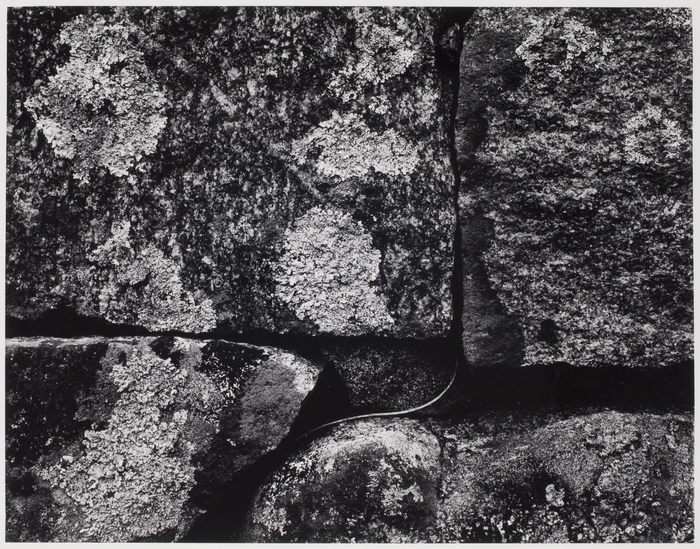
Aaron Siskind was also greatly impactful to straight photography. Originally an english teacher, he started with documentary photography, photographing Harlem, New York. This was until he had a falling out with the league he was working with and shifted to have a more abstract focus.
Both Edward Weston and Aaron Siskind captured images of high resolution and sharp sense of depth.
Andreas Gursky and Uta Barth
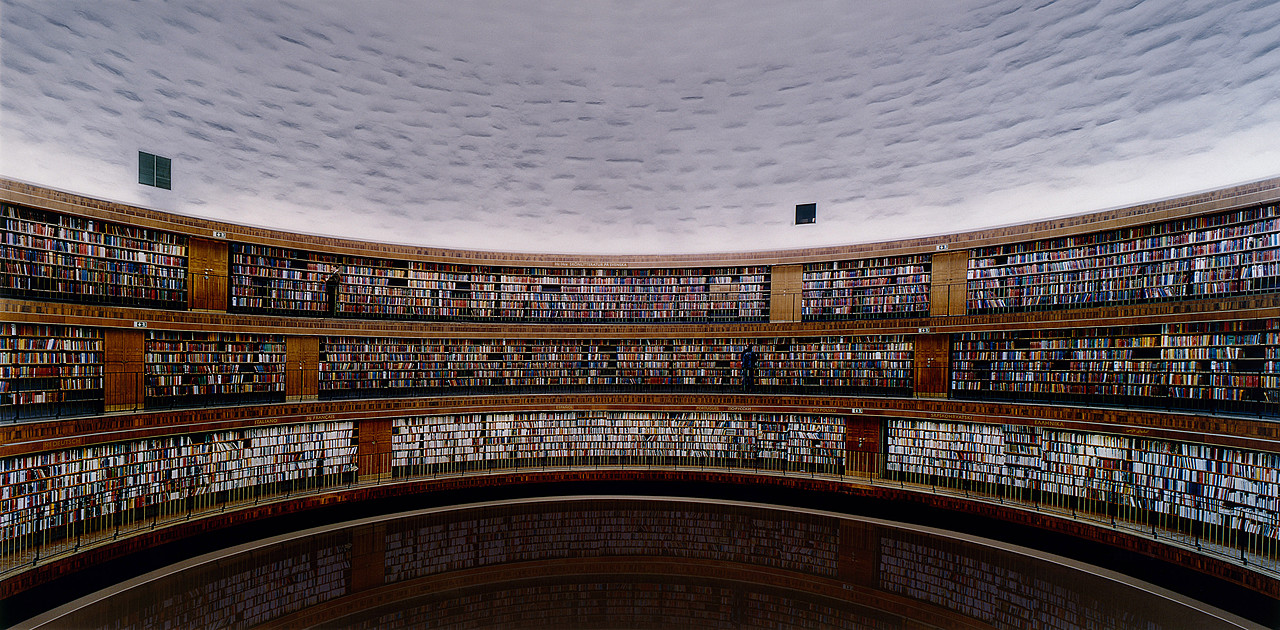
Andreas Gursky captured environments, built and natural. His works emphasized the textures and colors of an environment, rather than the specific objects within.
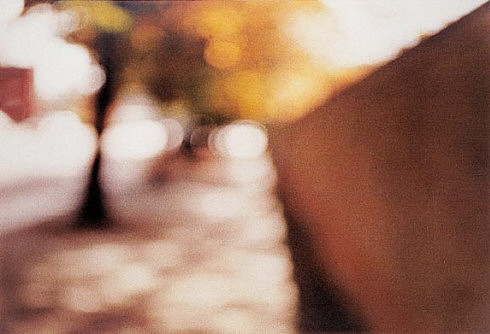
Uta Barth’s works can be defined by the hazy lack of focus. Her works take focus away from identifying the objects and to an overall view of color and experience.
The focus on color and texture rather than the specific objects within the image are what make these artists’ work, though very different in style, abstract.
I don’t think either of these photographers should be confined to a box of pictorialism or straight photography. While the techniques of Andreas Gursky have focus on capturing the details in the picture as is with straight photography, he manipulates the photos digitally, not abiding by the “no editing” rule. With Uta Barth, her works lack the focus necessary for it to be straight photography, but also don’t have the idealized subjects of pictorialism.
Works Cited
“Aaron Siskind.” Aaron Siskind | International Center of Photography, www.icp.org/browse/archive/constituents/aaron-siskind. Accessed 7 Sept. 2025.
“Andreas Gursky.” Artnet, www.artnet.com/artists/andreas-gursky/. Accessed 7 Sept. 2025.
Barth, Uta. Field #23. Photograph. 1998. The Guggenheim Museums and Foundation, New York, https://www.guggenheim.org/artwork/5345. Accessed 7 Sept. 2025.
Cameron, Julia Margaret. Venus Chiding Cupid and Removing His Wings. Photograph. 1872. Museum of Modern Art, https://www.moma.org/collection/works/44388?sov_referrer=art_term&art_term_slug=pictorialism. Accessed 7 Sept. 2025.
Gursky, Andreas. Library. 1999. The Guggenheim Museums and Foundation, New York, https://www.guggenheim.org/artwork/5433. Accessed 7 Sept. 2025
Hull, Craig. “The Straight Photography Movement: Capturing Reality through the Lens.” 100ASA, 2023, 100asa.com/blog/the-straight-photography-movement-capturing-reality.
Moholy-Nagy, László. Funkturm Berlin (Berlin Radio Tower). Photograph. 1928. The Art Story, Chicago, https://www.theartstory.org/movement/straight-photography/. Accessed 7 Sept. 2025.
“Pictorialism | Moma.” Museum of Modern Art, www.moma.org/collection/terms/pictorialism. Accessed 7 Sept. 2025.
Seiferle, Rebecca. “Pictorialism Movement Overview.” Edited by Kate Stephenson, The Art Story, 24 July 2018, www.theartstory.org/movement/pictorialism/.
Seiferle, Rebecca. “Straight Photography Movement Overview.” The Art Story, 30 Oct. 2017, www.theartstory.org/movement/straight-photography/.
Siskind, Aaron. Martha’s Vineyard 131B. Photograph. 1954. International Center of Photography, New York, https://www.icp.org/browse/archive/objects/marthas-vineyard-131b. Accessed 7 Sept. 2025.
“Straight Photography.” The Alfred Stieglitz Collection, The Art Institute of Chicago, archive.artic.edu/stieglitz/straight-photography/. Accessed 7 Sept. 2025.
Szarkowski, John. “Edward Weston.” Encyclopædia Britannica, Encyclopædia Britannica, inc., 20 Mar. 2025, www.britannica.com/biography/Edward-Weston-American-photographer.
Weston, Edward. Blue Dune, Oceano. Photograph. 1948. Holden Luntz Gallery, https://www.holdenluntz.com/artists/edward-weston/blue-dune-oceano/. Accessed 7 Sept. 2025.