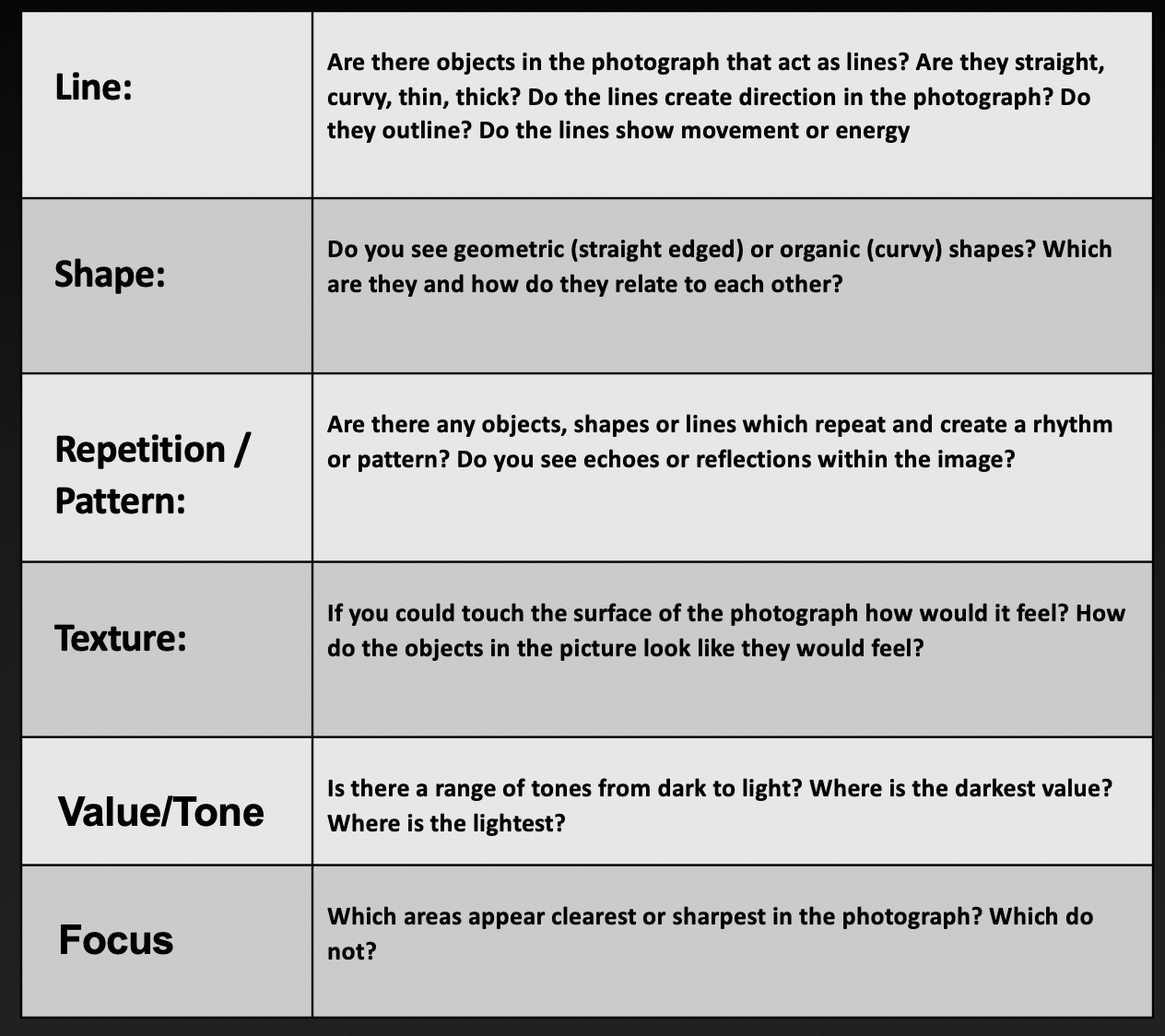
The Formal Elements of Photography are parts used to make a photograph. There are six types of Formal Elements of Photography and they are line, shape, pattern, texture, tone, and focus. These elements are often used together and how they are organized in a piece determines what the finished product will look like.
Line
Line is the most important and influential element out of the Formal Elements of Photography. This is because, without line, there is no shape. Without shape, there can be no form. Without form, there can be no texture and there can be no pattern. This makes line a starting point when thinking about Formal Elements. The straight line we are most familiar with isn’t the only type of line talked about in the Formal Elements. There are different types of lines. One type is known as leading lines. Leading lines are lines that can guide the viewer through your shot or to a specific focal point. Lines also don’t necessarily need to be straight, horizontal, or even vertical. They can also be curved, angular, or random. Angular lines converge into a central point which is commonly known as the vanishing point that adds perspective to your image.
Shape
Shape in photography usually means by a 2D subject outline. Shape on your composition can turn objects, landscapes, and figures into defined striking focal points in your image. By using various lighting techniques, such as backlighting, silhouettes, and paying attention to shadows, it will help elevate the shapes in your shot.
Pattern / Repetition
Patterns in photography can be aesthetically pleasing and draws attention to a photograph. Some important aspects of patterns are Rhythm and Symmetry. Rhythm is when a shape is repeated in a photograph. Symmetry is when a photograph looks like it consists of two objects that are mirrored images of each other. Symmetry can also be subverted so the two objects are similar but not quite alike. These draw the viewer into the photograph and make the photograph more interesting.
Texture
Textures in photography conveys the tactile surface quality of a subject. These include rough, smooth, soft, hard which stimulates the sense of touch. It adds depth, detail, and interest to the image which is often emphasized by using lighting to create contrast and shadows.
Tone / Value
Tone in photograph focuses using variables of contrast, light, and dark areas in your image that brings depth. Tone is fundamental in most black and white photography in where it should guide the viewer through your image where there is no color present to focus their attention on.
Focus
Focus in photography is the process of adjusting the camera lens to make a specific subject or the area of an image as sharp, clear, and detailed as possible. Focus determines which parts of the image appears in focus and which appear blurry (out of focus), which serves as a crucial tool for guiding the viewer’s eye to a focal point in an image.

This photo emphasizes the Formal Element of Line, mainly through the building’s structure. The windows and frames in this building fills the image with vertical and horizontal lines that repeat across the entire structure of this building. The vertical lines makes the building appear tall and draws the viewer’s eyes upwards, while the horizontal lines add stability. These repeated lines also create a pattern that gives the photo a sense of rhythm and structure. the bright blue color lighting in this image makes the lines stand out against the darker pitch black background, making them the main focus of this image. Since the lines are so clean and consistent, they guide the viewer’s attention and highlight the overall building’s geometric shape. This photo also emphasizes the Formal Elements of Shape and Tone because for shape, each window forms small rectangular shapes that build the larger shape of the building and for tone, it is visible in the contrast between the bright blue building and the darker pitch black background. So overall, this photo emphasizes four Formal Elements which are Line, Pattern / Repetition, Shape, and Tone.

This photo emphasizes the Formal Element of Focus, by using shallow focus which makes the front books seem sharp while the background is blurred. This draws attention to the main subject and creates depth in the image. This photo also emphasizes the Formal Element of Tone, since this image uses warm tones like brown and red which creates a cozy and calm vibe which makes the image feel soft. You can also see the Formal Element of Texture in the book covers and pages, which adds detail and makes the objects feel more realistic. So overall, this photo emphasizes the Formal Elements of Focus, Tone, and Texture.
Question: Can an image show just one element at a time?
In my opinion, an image cannot show only one formal element at a time because I think that images naturally contain several formal elements at the same time. For example, even when a photographer tries to highlight one element such as line or tone, other elements like shape, texture, or focus will be present. This is because strong lines in a photo will also create shapes and changes in tone will reveal texture and depth. However, this does not mean that one element cannot stand out more than the other. One element can still stand more out more than the others and become the main focus of the image. I mean that while a photo may emphasize one formal element, it almost always will include multiple other formal elements working together.
Citation:
“The Formal Elements.” Luca Nembhard, lucanembhardphotos.weebly.com/the-formal-elements.html.
Focus: Understanding the 7 Formal Elements of Photography. focus.picfair.com/articles/7-formal-elements-photography.
Leave a Reply
You must be logged in to post a comment.